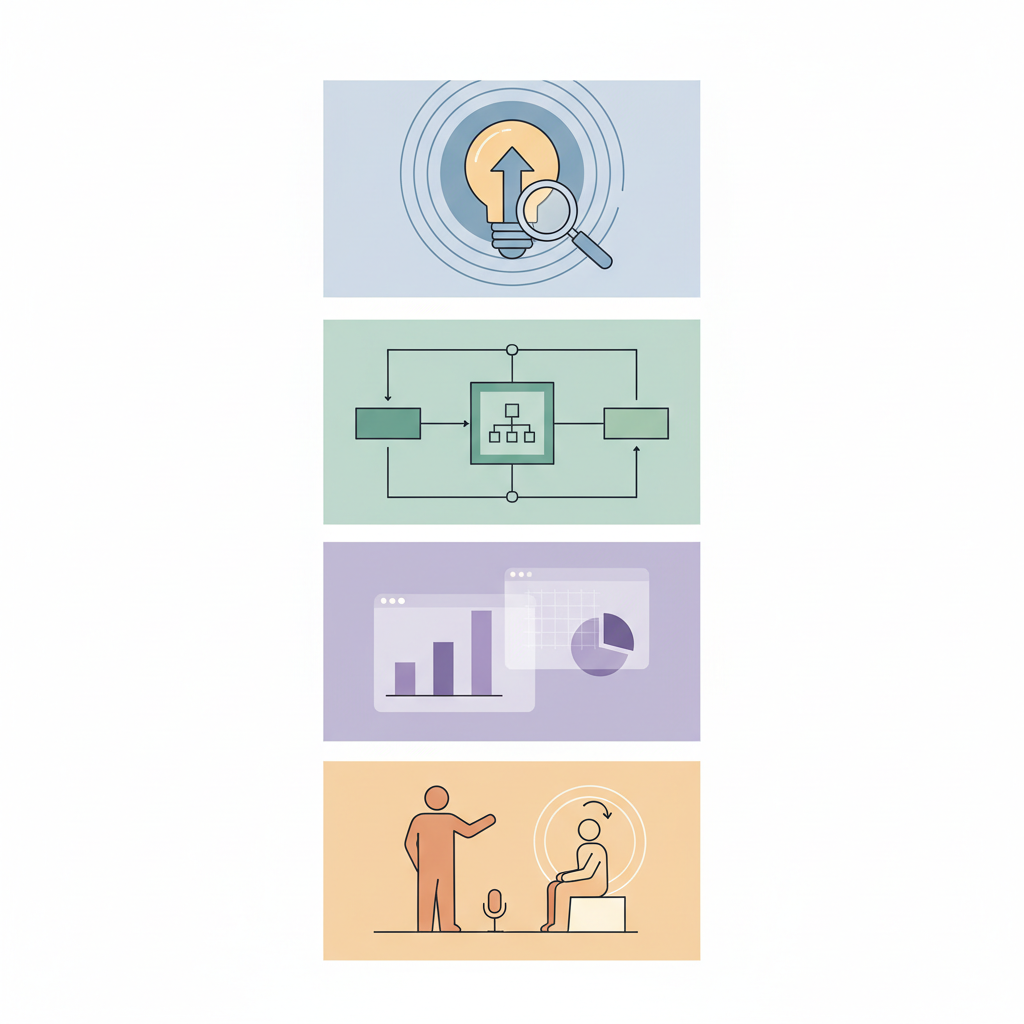
办公软件是一个生态壁垒极高的市场,微软Office和谷歌Workspace拥有海量用户和深度绑定的企业习惯。但AI交互范式的变化,可能带来难得的窗口期。微软推出Copilot、谷歌推出Gemini for Workspace,看似反应迅速,但在实际工作中,用户仍然需要频繁切换工具、手动整理上下文。这正是新玩家可以切入的空间:如果一款产品能让用户只描述目标,系统自动拆解任务、调用不同应用、生成最终结果,就有机会撬动存量用户。国内飞书、钉钉、WPS也在做类似探索,说明这一趋势并非硅谷独有。
The gap between artificial intelligence spending and measurable business results is widening. Companies around the world are buying AI tools
The gap between artificial intelligence spending and measurable business results is widening. Companies around the world are buying AI tools, experimenting with generative assistants, and adding AI features to HR, finance, and customer service workflows. Yet according to Torsten Sløk, chief economist at Apollo Global Management, most organizations outside the technology sector have little to show for it on their income statements. His blunt assessment: AI has delivered ‘zero financial payoff’ to corporate America beyond tech.
That claim may sound extreme, especially given the wave of enterprise AI announcements and the productivity gains reported by early adopters. But it highlights a real tension. The companies building AI infrastructure and models are posting dramatic revenue growth, while the companies buying those tools often struggle to connect them to profit. The result is a two-speed economy: a narrow group of AI suppliers thriving, and a much larger group of adopters waiting for a return that remains hard to find.
The investment boom meets a sobering bottom line
Corporate spending on AI has soared in recent years, driven by fear of falling behind as much as by clear business cases. Large firms have allocated billions to cloud capacity, software licenses, pilot programs, and training. Many have created AI task forces and appointed chief AI officers. In surveys, executives regularly list AI as a top strategic priority.
Yet aggregated financial data tell a more cautious story. Outside the tech sector, productivity growth remains modest, and operating margins have not improved in ways that can be directly attributed to AI. Some companies report faster email drafting, better meeting summaries, or quicker customer service responses, but these gains have not reliably translated into lower costs or higher revenue. Sløk’s analysis suggests that for most firms, the technology is still a cost center rather than a profit driver.
Why adoption has not become transformation
One reason is that many AI deployments stop at experimentation. Teams pilot a chatbot or a document summarizer, see improvement in a narrow task, and then struggle to scale the change across the organization. Another issue is that AI often automates small pieces of larger workflows, so the overall process time barely moves. If a recruiter uses AI to draft job descriptions but still spends the same amount of time coordinating interviews, the bottom-line effect is minimal.
Data quality also plays a role. AI models depend on clean, well-organized information. Many companies have fragmented HR systems, outdated records, and inconsistent processes. When AI is layered on top of that mess, it can produce plausible but unreliable outputs, requiring human review that eats into any time saved. In recruiting and HR, this is especially visible: AI can screen resumes quickly, but if the underlying criteria are biased or the data is incomplete, the results may create more work, not less.
There is also an expectations problem. Vendors and media coverage often emphasize breakthrough demos rather than steady operational improvement. Leaders who expect AI to transform profitability in one or two quarters are usually disappointed. The companies that do see returns tend to take a longer view, redesigning processes around the technology rather than simply plugging it into existing workflows.
What this means for HR and business leaders
For HR professionals, the message is not to avoid AI but to be disciplined about where and how it is used. The most promising areas are repetitive, high-volume tasks: drafting job posts, summarizing candidate feedback, answering routine employee questions, and organizing learning content. The least promising are complex judgment calls where context, fairness, and legal risk matter. In those areas, AI should support humans, not replace them.
Business leaders should also set realistic metrics. Instead of measuring AI success by the number of tools deployed, they can track cycle time, cost per hire, employee satisfaction, and manager hours saved. Those metrics make it easier to see whether AI is actually helping. If a new tool does not move any of those numbers after a defined period, it may be time to stop paying for it.
For teams managing remote and hybrid work, the same logic applies. AI can help with scheduling, onboarding, and performance documentation, but only if the underlying workflows are already clear. Tools that promise to ‘fix’ a messy process usually just automate the mess. Companies that first simplify their HR processes and then add AI where it fits tend to report better results.
The Apollo economist’s warning is a useful corrective. AI is not a guaranteed path to profit, and most companies will not see a financial payoff simply by adopting the latest tools. The winners will be those that treat AI as one part of a broader effort to improve how work gets done. For HR leaders managing distributed teams on platforms such as XMF, that means pairing any AI rollout with clear goals, honest measurement, and a willingness to stop initiatives that do not deliver.
Originally published by XMF, inspired by publicly reported industry news.
DEI(Diversity, Equity and Inclusion,多元、公平与包容)近年是美国企业治理的关键词,许多公司从招聘、晋升到供应商选择都嵌入相关指标。但争议也随之而来:当企业以性别、族裔作为筛选依据时,是否在制造新的“反向歧视”?此次判决并非全面否定DEI,而是提醒企业,多元化不能通过简单按身份比例分配机会来实现。法院关注的不只是结果,更是过程——候选人是否因为身份标签而不是能力被提前排除。