近日,Meta 首席执行官马克·扎克伯格在一份面向未来的 AI 宣言中抛出了一个看似矛盾的判断:人工智能会让工作机会增加,但企业所需的员工数量却会减少。这番言论迅速在人力资源与企业管理圈引发震荡——当“个人超级智能”走到每个人身边,HR 领导者们该重新思考自己的角色了。自动化不会
近日,Meta 首席执行官马克·扎克伯格在一份面向未来的 AI 宣言中抛出了一个看似矛盾的判断:人工智能会让工作机会增加,但企业所需的员工数量却会减少。这番言论迅速在人力资源与企业管理圈引发震荡——当“个人超级智能”走到每个人身边,HR 领导者们该重新思考自己的角色了。
自动化不会取代人类,而是重塑就业结构
扎克伯格的核心论点并不新鲜,但表述更为大胆。他相信 AI 自动化并不会超越人类的整体能力,而是会成为“个人超级智能”的延伸,帮助个体在创造、决策和问题解决上实现指数级提升。这意味着,大量重复性、流程化的工作会被智能体高效接管,但新的、更高价值的工作也会随之涌现——本质上是工作内容与所需技能的洗牌,而不是就业机会的净消失。
对 HR 而言,这种“更多工作、更少人工”的格局,恰恰反映出效率的悖论:当一个人借助 AI 可以完成过去三个人才能做的事,企业确实可能用更少的全职员工来维持同等甚至更高的产出。医疗、法律、教育等知识密集型行业已在初步验证这一趋势,专业工作不再完全依赖人头堆积,而是转向“专家+智能体”的协作模式。
HR 领导者面临三重挑战
宣言让企业管理层不得不直面几个问题。首先,人才获取的标准将彻底改变。比起单纯寻找经验匹配的候选者,未来更看重员工与 AI 协同工作的“增强能力”——如何提问、如何校验输出、如何在人机回路中做出关键判断。招聘不再只是填充职位,而是在设计人与智能体的最佳组合。
其次,组织架构面临瘦身与重组。Visa 近日因 AI 推动效率而裁减 7%员工,其中包括副总裁和高级工程师级别的资深岗位,这恰恰说明自动化并非只触及基层。HR 需要提前规划内部技能重塑方案,让现有人力转向无法被 AI 轻易替代的领域——比如关系建立、创意突破和高度定制化的服务。
Europe is racing to secure its place in the global artificial intelligence landscape, but a new scenario analysis suggests that chips and co
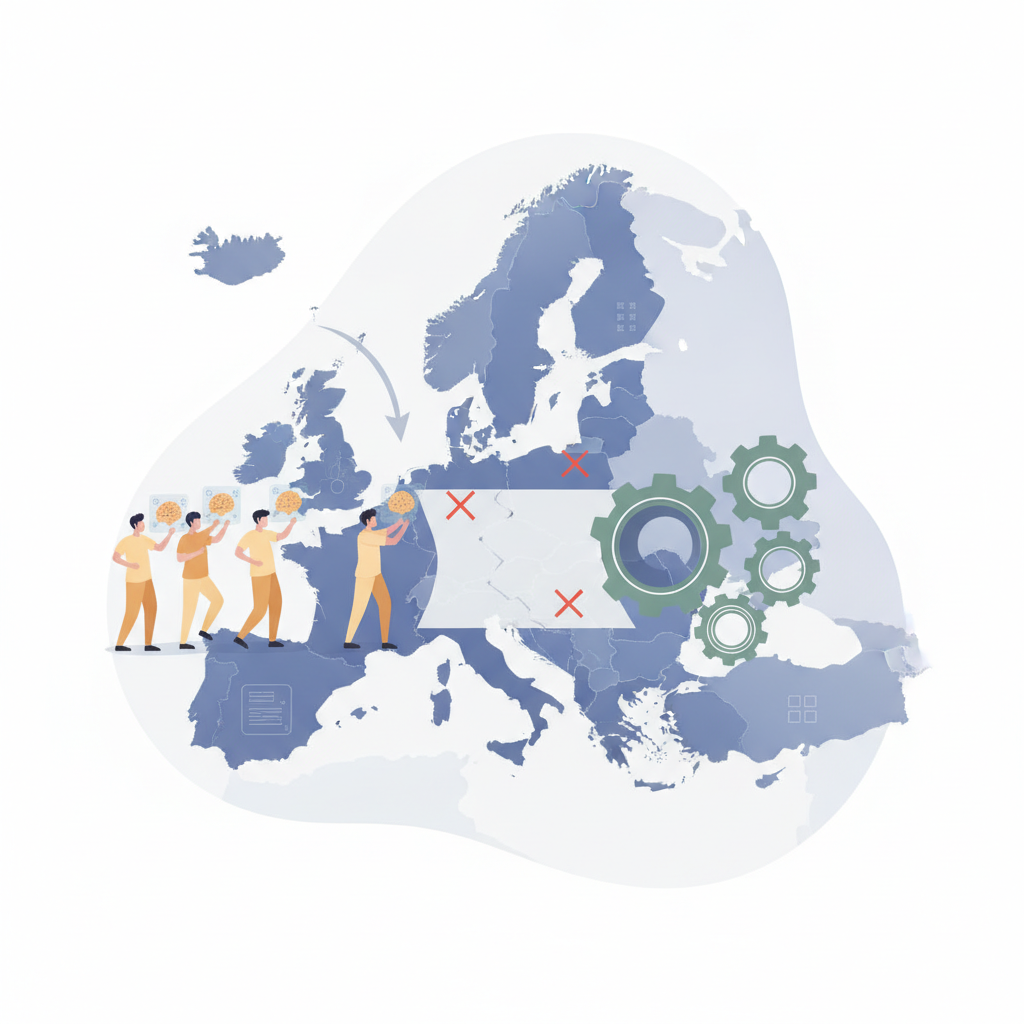
Europe is racing to secure its place in the global artificial intelligence landscape, but a new scenario analysis suggests that chips and computing infrastructure are only half the battle. A more immediate risk lies in a widening workforce skills gap that, if unaddressed, could quietly derail the continent’s ambitions and carry a staggering economic cost. HR leaders are being urged to move reskilling from a long-term aspiration to an urgent operational priority.
The report, which models several future pathways for European competitiveness, puts a concrete number on the talent deficit—and the figure is sobering. It estimates that a failure to equip workers with AI-related competencies could drain hundreds of billions of euros from the economy over the next decade, wiping out productivity gains expected from automation and digital transformation. The message is clear: investing in technology alone is not a strategy; people must be at the center.
The Hidden Cost of the AI Compute Race
For the past two years, public and policy attention has fixated on semiconductors, supercomputers, and sovereign cloud infrastructure. These are critical, but the report’s scenarios shift the spotlight to the human layer. Without enough data scientists, machine learning engineers, AI ethicists, and tech-fluent domain experts, the advanced infrastructure will remain underutilized. Companies will be forced to delay projects, outsource critical capabilities, or abandon innovation initiatives altogether.
The talent crunch is not limited to deep tech roles. The analysis highlights a parallel scarcity of hybrid professionals—finance analysts who understand predictive modeling, HR specialists who can deploy AI-driven workforce planning tools, supply chain managers capable of interpreting algorithmic forecasts. These “AI-adjacent” skills are precisely where the productivity upside resides, yet they are rarely included in traditional upskilling budgets. By quantifying the opportunity cost, the report gives HR and business leaders a powerful argument to expand learning and development programs beyond IT departments.
Reskilling as a Strategic Imperative
For HR executives, the scenarios represent a call to rethink workforce planning from a risk-management perspective. Rather than treating reskilling as a nice-to-have benefit, leaders should frame it as a hedge against competitive decline. The report suggests that organizations which embed continuous learning into their operating models—through internal academies, cross-functional project rotations, and partnerships with educational institutions—are far more likely to meet their digital transformation goals.
This shift demands a new collaboration between HR, IT, and the C-suite. It means mapping existing employee capabilities against future needs, identifying adjacent skills that can be developed in months rather than years, and creating transparent career pathways that encourage retention. The report underscores that the most successful companies will not just hire their way out of the talent gap; they will build and borrow talent simultaneously, leveraging contingent workers and gig-based expertise to fill immediate voids while reskilling permanent staff for the long term.
From Insight to Action: What HR Leaders Can Do Now
The scenarios are not predictions—they are possible futures based on decisions made today. HR leaders who act early can help steer their organizations toward a more resilient path. Practical steps include auditing the existing workforce for latent digital skills, launching short-form credential programs co-designed with business units, and exploring agile staffing models that bring AI expertise in on a project basis without diluting institutional knowledge.
The report’s quantification of talent risk also serves as a communication tool. For the first time, HR can attach a financial number to the cost of inaction, making it easier to secure board-level buy-in for ambitious people strategies. In boardroom conversations where technology investments often dominate, this data reframes talent development as a direct contributor to competitiveness and shareholder value.
As the AI landscape evolves, the gap between organizations that invest in their people and those that merely buy technology will widen rapidly. The European economy’s digital future may well be decided not in datacenters, but in the everyday decisions HR leaders make about who gets trained, who gets hired, and how quickly skills can adapt.
Originally published by XMF, inspired by publicly reported industry news.