When a well-qualified woman scrolls past a job posting without applying, the reason is not always salary, location, or role mismatch. Increa
When a well-qualified woman scrolls past a job posting without applying, the reason is not always salary, location, or role mismatch. Increasingly, HR researchers are pointing to a quieter factor: the faces and voices a company chooses to put forward. If a careers page, job ad, or leadership spotlight consistently shows men in the roles being advertised, many women read that as a signal that they do not belong. The result is a shrinking applicant pool that no amount of outreach can easily fix.
The Visual Cues That Quietly Filter Applicants
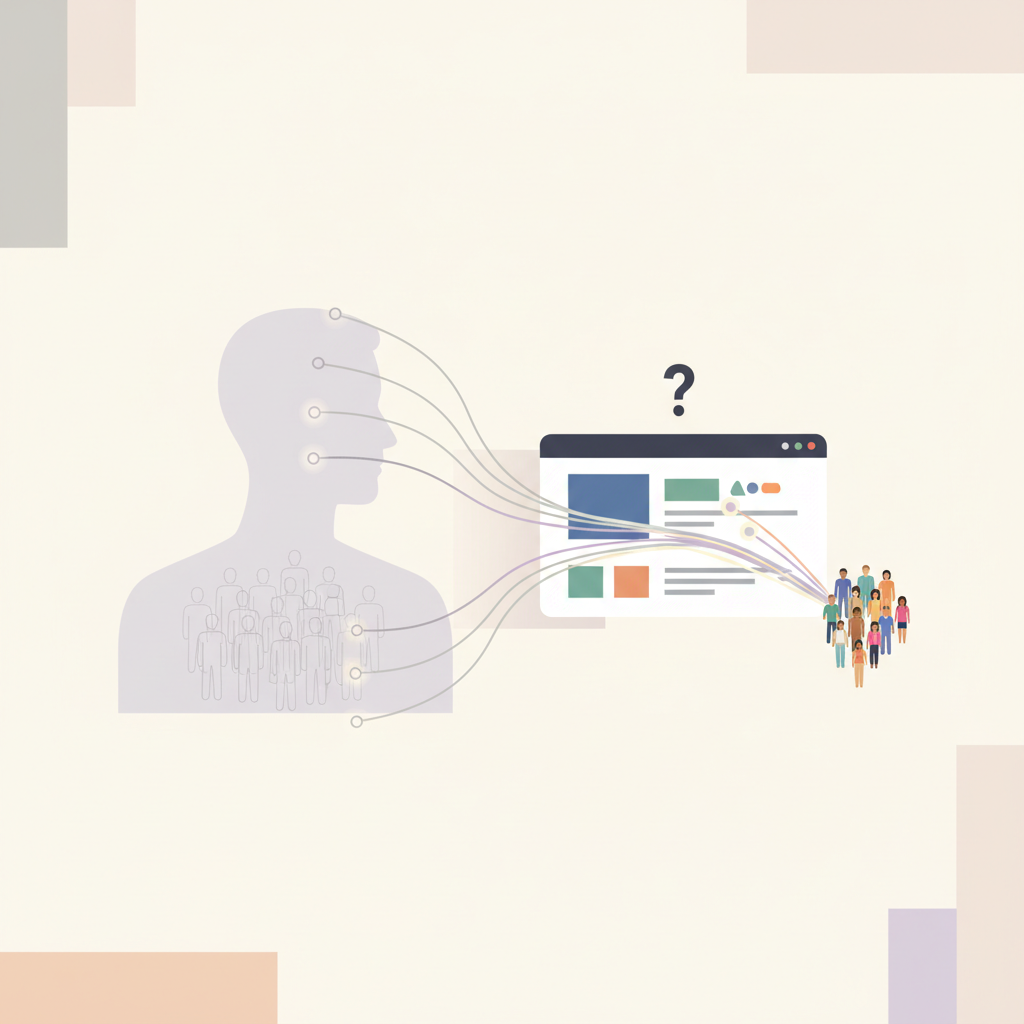
Job seekers rarely read a posting in isolation. They click through to the company’s careers page, scan team photos, watch a culture video, or browse employee testimonials on LinkedIn. These images are processed quickly, often unconsciously. When every technical or leadership role appears to be held by a man, women may infer that their gender is not typical in that environment. Social identity research suggests people avoid settings where they expect to feel like outsiders, even if their skills are a strong match. The absence of representation is therefore not a neutral fact; it is an active message about who is welcomed and who is not.
The effect is especially strong in fields where women are already underrepresented. A software engineering opening with a page filled only with male developers may confirm a stereotype that already exists. For some candidates, this is not about overt discrimination but about the exhaustion of having to prove belonging before they even apply. Employers who say “women just don’t apply” may be overlooking how their own employer brand has narrowed the funnel.
Beyond the Pipeline: Rethinking the Application Gap
A common explanation for a lack of female applicants is a pipeline problem: too few women study certain subjects or enter certain industries. While pipeline constraints are real in some sectors, they do not explain every vacancy. The same pool of qualified women may respond differently to two versions of the same job. One version may feature an all-male team photo and language that emphasizes dominance and aggression. Another may show a mixed-gender team and describe collaboration and problem-solving. Even subtle changes can shift application rates.
HR teams should also consider that representation is not only about gender balance in photos. It includes who speaks in videos, who is named in employee stories, and which employees are highlighted as role models. If a company’s only female featured story is about an administrative assistant while all engineering interviews feature men, the message is clear. Qualified women may not self-select out of the role itself; they may simply decide the organization is not ready for them.
Practical Audits for Recruiting Teams
Fixing this does not require a major rebrand. Recruiting and HR leaders can start with a simple audit. Review the last ten job ads, careers page images, and social media posts aimed at candidates. Count how often women appear, in what roles, and whether they are shown as peers or as support staff. Look for patterns in language: words like “competitive,” “rock star,” or “dominant” may appeal to a narrower audience, while inclusive language can widen the pool without lowering standards.
Next, involve employees. Request short testimonials from women in technical, operational, and leadership roles. Use their real photos and titles rather than stock images. Authenticity matters: candidates can tell when a photo is staged or when a company is tokenizing one employee. Better to show three genuine examples than a dozen generic images. Finally, measure results. Track applicant demographics by source and experiment with different ad versions. A small change to a job title, image, or description can reveal how much representation was shaping the outcome.
For employers hiring remote or distributed teams, representation extends beyond the office. The images on a remote-first careers page still shape perceptions, and flexible hiring platforms can help companies reach candidates who might otherwise never see the posting. A platform like XMF, which connects businesses with flexible and remote talent, can broaden the top of the funnel, but the employer brand still has to make candidates feel they belong once they arrive.
Representation may feel like a soft issue, but its impact on the applicant pool is measurable. When women see a plausible version of themselves inside an organization, they are more likely to apply, to stay, and to recommend it. For HR teams trying to close gender gaps, auditing the images and words around a vacancy is not an afterthought—it is one of the most direct levers available.
Originally published by XMF, inspired by publicly reported industry news.
As hiring teams rush to adopt AI tools that transcribe, summarize, and evaluate candidate interviews, a less visible challenge is emerging:
As hiring teams rush to adopt AI tools that transcribe, summarize, and evaluate candidate interviews, a less visible challenge is emerging: the very convenience of automated note-taking may create a trail of data that companies are not prepared to defend. Recruiters and hiring managers often treat AI-generated summaries as disposable working notes. In reality, they can become formal records in a dispute.
Why AI summaries are harder to ignore than handwritten notes
Traditional interview notes are often fragmented, subjective, and limited to the interviewer’s memory. AI tools change that by producing polished, consistent, and searchable summaries within seconds. While this can reduce busywork, it also means every paraphrase, inferred trait, or red flag may be stored in a system that retains far more than a human would write down.
The problem is not that AI summaries exist, but that many organizations have not decided how long to keep them, who can access them, or whether they count as hiring records. In some jurisdictions, employment laws require retaining recruitment documentation for a set period, and candidates may have the right to request their own data. An unstructured repository of AI-generated interview notes can make compliance difficult and inconsistent.
The legal risk inside a convenient summary
When a rejected applicant raises a discrimination claim, courts and regulators typically ask what the employer actually relied on. AI-generated summaries can cut both ways. They may help demonstrate a structured, criteria-based process, or they may expose offhand remarks, biased language, or selection criteria that were never officially approved.
Even when a summary is an accurate reflection of an interview, the language may be troubling. A human might write “candidate seemed hesitant.” An AI summary might render that as “candidate lacked confidence,” “not a culture fit,” or another phrase that implies a protected characteristic. Whether those interpretations are fair or not, they can become evidence. The risk increases when recruiters accept AI summaries without reading the underlying transcript or verifying the model’s interpretation against their own impression.
There is also a practical danger: AI systems are not neutral. They may amplify the interviewer’s assumptions or introduce their own patterns based on training data. If a summary includes an inference about a candidate’s communication style, age, family status, or career gap, the employer may have to explain why that inference was relevant to the job. Many companies cannot currently reconstruct that decision trail.
What HR teams should do before the tool outpaces the policy
Organizations do not need to abandon AI note-taking, but they should treat it as a formal part of the hiring record. That starts with a clear retention policy. Teams should decide whether AI summaries are kept, for how long, and whether they are attached to the applicant tracking system or stored separately. A fragmented storage approach makes it harder to respond to data requests and legal hold orders.
Second, recruiters and hiring managers need guidance on what belongs in an AI-assisted summary. Personal observations, speculative comments, and offhand impressions should be excluded. If a summary does include such content, the reviewer should correct it before it becomes part of the record. This is not simply editorial hygiene; it is risk management.
Third, teams should test the AI tool’s outputs before relying on them. Ask whether summaries consistently reflect the questions asked and the candidate’s answers, whether flags are justified by evidence, and whether the tool’s language could be read as discriminatory. A vendor’s compliance claims are less important than how the system behaves with real interviews in your own hiring process.
Finally, candidates should be told when AI is used to summarize or assess their interviews. Transparency does not eliminate legal risk, but it builds trust and helps set expectations about what is being recorded and retained. It also forces a company to write down its own policy, which is often the first step toward compliance.
AI can make hiring more efficient, but efficiency without governance tends to create records that outpace the organization’s ability to explain them. For many recruiting teams, the next step is not another tool evaluation; it is deciding what happens to the summaries after the meeting ends.
Originally published by XMF, inspired by publicly reported industry news.