Many business leaders assume that if one AI agent can handle a task, several agents working together must do it even better. New research fr
Many business leaders assume that if one AI agent can handle a task, several agents working together must do it even better. New research from Vals AI challenges that view. In controlled evaluations, teams of AI agents barely outperformed solo agents while costs rose by up to 5.1 times. For organizations already watching AI spending, that is a clear signal to pause before building elaborate multi-agent workflows. The findings are especially relevant for remote and hybrid teams, where AI experimentation can spread quickly without central oversight.
When More Agents Do Not Mean Better Results
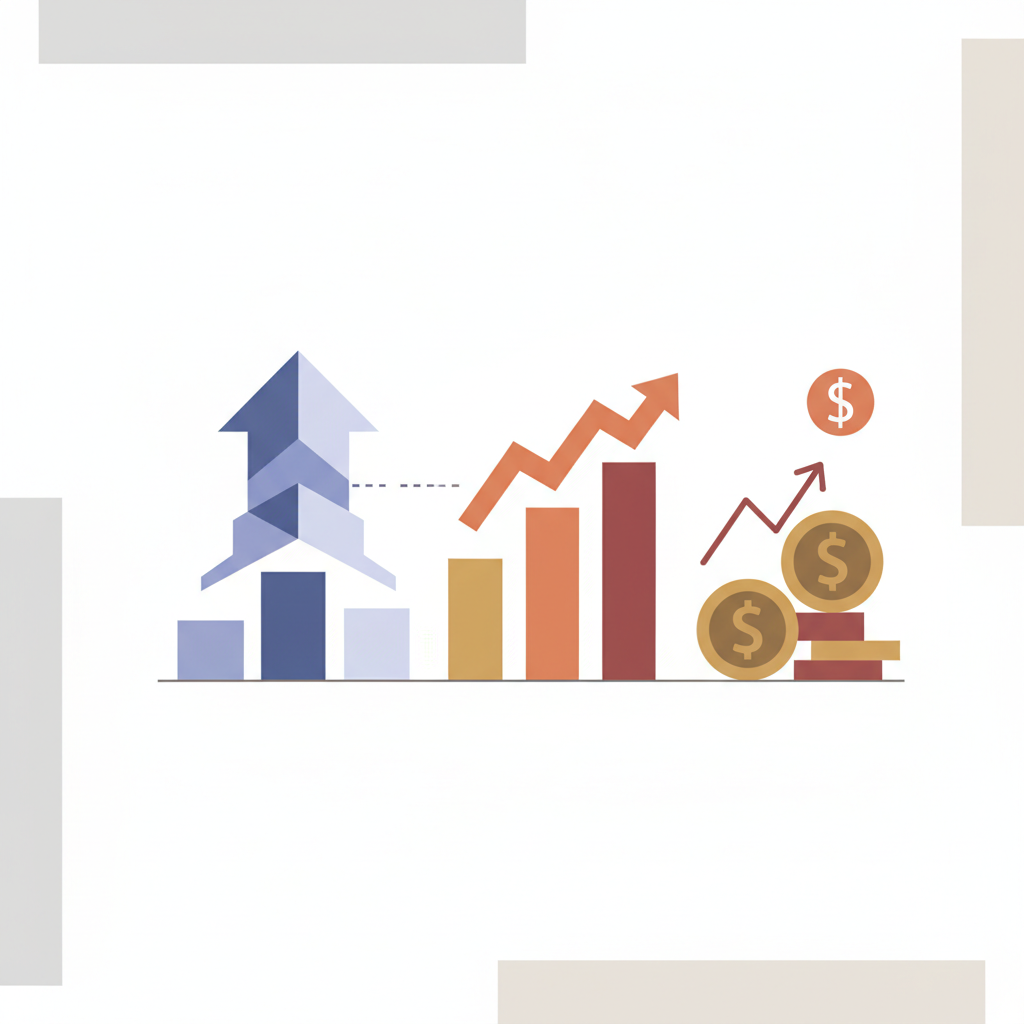
The study compared individual frontier models against multi-agent teams using models including GPT-6 Sol and Claude Opus 5.5. Across four test scenarios, only one produced a measurable quality gain from teamwork. The other three delivered essentially the same output as a single agent while consuming far more tokens and compute. In practical terms, a task that costs one amount with a solo agent could cost more than five times as much when assigned to a team, with no meaningful improvement in accuracy, completeness, or usefulness.
This runs counter to the popular assumption that adding agents mimics human collaboration. In theory, one model can draft, another can review, and a third can fact-check. In practice, agents often duplicate work, pass redundant context back and forth, and generate internal text that does not change the final answer. The expense comes from coordination, not from better reasoning. A single well-prompted agent is frequently all that a defined task requires.
Not every task is the same. The isolated case where a team improved suggests that some complex workflows may benefit from parallel perspectives, particularly when tasks can be cleanly divided and independently checked. But even then, the gain has to be weighed against the higher bill. The burden of proof should sit with the team advocating for extra agents, not with the manager trying to contain costs.
The Hidden Cost of Agent Coordination
Multi-agent systems are not inherently flawed, but their overhead is real. Every additional agent reads prompts, produces responses, and shares information with other agents. Those exchanges consume tokens at each step, which translates directly into higher API bills and longer response times. When the task is relatively contained—such as summarizing a document, classifying a request, or drafting a routine message—a solo agent with clear instructions is usually sufficient. Adding reviewers, critics, and planners can simply multiply token consumption.
Finance and operations leaders should therefore treat multi-agent architecture as a hypothesis rather than a default. A practical approach is to run a small controlled comparison. Give one agent a defined task and measure quality, latency, and cost. Then test a multi-agent version on the same task. If the team setup does not produce a clear improvement in output, the simpler system is the rational choice. This kind of pilot testing can prevent AI budgets from ballooning while delivering no better service to employees or customers.
What This Means for Workplace AI Adoption
For HR teams, IT departments, and people managers, the research strengthens the case for disciplined AI adoption. The goal is not to maximize the number of agents an organization can deploy, but to solve real problems at a reasonable cost. In recruiting, a single agent can screen resumes, extract skills, or draft interview summaries. A multi-agent pipeline in which one model reviews another model’s notes may slow the process and raise costs without improving candidate outcomes.
HR leaders can also apply this lesson by auditing current AI tools. Many teams already pay for assistants, copilots, and agent features that overlap. Consolidating to one reliable tool for a specific job may reduce both subscription costs and employee confusion while making outputs easier to audit.
The same logic applies to distributed work. Remote teams often adopt AI tools at different speeds, and complex agent workflows can spread inside a company before their value is proven. The Vals AI findings encourage teams to separate enthusiasm for agentic AI from the harder work of measuring impact. Before scaling a tool, leaders should ask whether it reduces time, improves quality, or lowers cost—and whether a simpler setup could do the same.
For organizations using platforms like XMF to coordinate flexible talent and remote operations, the lesson is relevant: clearer task design and stronger human coordination often beat adding more automated layers. AI agents can be valuable, but value comes from fit, not from the number of agents involved.
Originally published by XMF, inspired by publicly reported industry news.
The rapid spread of AI-based hiring tools has reached a new legal flashpoint in California. The American Civil Liberties Union has filed a c
The rapid spread of AI-based hiring tools has reached a new legal flashpoint in California. The American Civil Liberties Union has filed a complaint over Emotify, an assessment platform used by employers to evaluate job candidates, according to HR Dive. The action adds to a growing body of challenges arguing that automated pre-employment tests can discriminate even when they look objective.
For HR teams, the case is a reminder that algorithmic hiring is not a compliance shortcut. Employers remain responsible for the tools they buy, the scores they rely on, and the candidates who get screened out before a human reviewer ever sees their application.
Why automated assessments are under scrutiny
Hiring assessments often promise to reduce human bias by applying consistent criteria to every applicant. But consistent scoring does not guarantee fair outcomes. If a tool has been built from data that reflects past hiring patterns, it can reproduce historical bias at scale. If it analyzes language, tone, response time, or emotional cues, it may penalize candidates whose communication style differs from the profile the model was designed to reward.
That is especially concerning for remote and hybrid hiring, where an automated assessment may be the only structured signal an employer collects. Candidates with disabilities, neurodivergent applicants, non-native English speakers, and people from underrepresented backgrounds can be scored down for reasons that have little to do with their ability to perform the job. In a traditional process, a skilled interviewer might notice those nuances. In an automated funnel, the rejection may be invisible and unexplained.
What the California complaint signals
The ACLU’s move in California matters beyond a single vendor. California has some of the strongest workplace protections in the United States, and state regulators have shown a willingness to investigate how hiring algorithms affect protected groups. Because remote hiring routinely crosses state and national borders, a California-focused complaint can influence how employers everywhere design and monitor their selection systems.
The challenge also reflects a broader regulatory trend. New York City already requires bias audits for many automated employment decision tools, and the European Union’s AI Act classifies some employment-related AI systems as high risk. The common thread is the same: employers cannot simply trust a vendor’s claim that a test is fair, valid, or free from bias.
Practical steps for HR and recruiting teams
First, map every automated tool in the hiring process. Identify which vendors are screening, scoring, ranking, or rejecting candidates, and ask for documentation on what the tool measures and how it was validated. A credible vendor should be able to explain the link between assessment outputs and job-relevant performance.
Second, preserve human oversight. Automated scores should inform decisions, not make them silently. If a candidate is deprioritized because of an assessment result, there should be a clear record, a path for human review, and a way for candidates to request an alternative evaluation or reasonable accommodation.
Third, run regular audit checks. Review pass rates across gender, race, age, disability status, and language background. Look for unexplained drops at any stage of the funnel. The goal is to catch patterns early, before they become a formal complaint or a reputational crisis.
The Emotify case may be an early signal of more challenges to AI-driven hiring. For employers operating in remote and flexible work environments, the lesson is simple: technology can make hiring faster, but it cannot outsource fairness. Legal accountability stays with the organization that makes the final call.
Originally published by XMF, inspired by publicly reported industry news.