The U.S. Equal Employment Opportunity Commission is signaling that it may revise or withdraw key regulations under the Pregnant Workers Fair
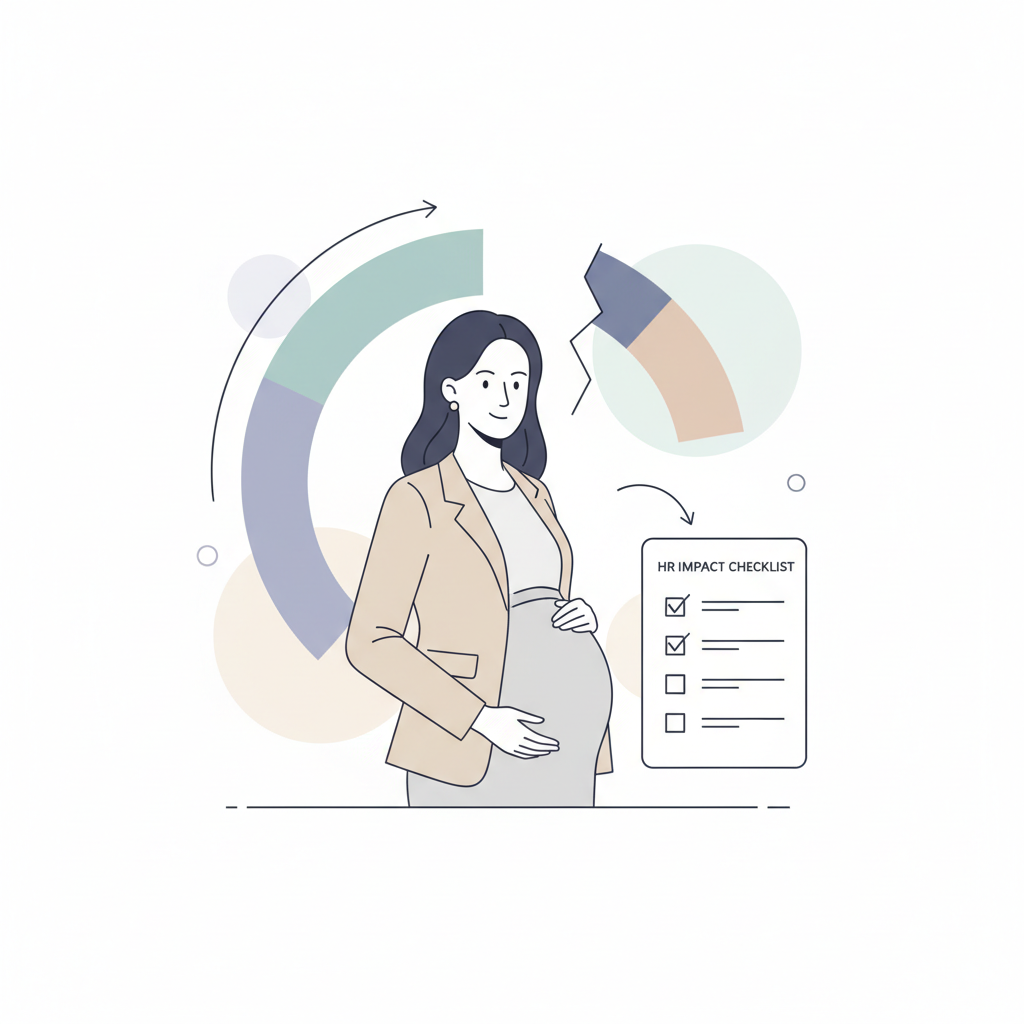
The U.S. Equal Employment Opportunity Commission is signaling that it may revise or withdraw key regulations under the Pregnant Workers Fairness Act, a move that would ripple through HR departments already balancing federal, state, and local accommodation rules. For employers, the immediate question is not whether the underlying law disappears—it does not—but how much federal interpretive guidance will shift, and what that means for day-to-day accommodation decisions.
The statute, enacted in 2022 and enforced since 2023, requires covered employers to provide reasonable accommodations to employees for known limitations related to pregnancy, childbirth, or related medical conditions, unless doing so would impose an undue hardship. Unlike older legal standards that often forced pregnant workers onto unpaid leave, the PWFA was designed to keep people working safely. The now-disputed regulations spell out how employers should apply those duties in practice.
What the current rules actually require
Under the existing federal regulations, employers with at least 15 employees must engage in a timely, good-faith interactive process when a worker asks for an accommodation. Common accommodations include more frequent breaks, schedule modifications, temporary reassignment of marginal duties, time off for prenatal appointments or recovery, and in some cases remote work. Employers cannot automatically place a pregnant employee on unpaid leave when another reasonable accommodation would allow her to keep working.
The regulations also address when medical documentation may be requested and make certain accommodations—such as allowing a water bottle, additional restroom breaks, or sitting during a shift—presumptively reasonable without extensive paperwork. Some of the most contested provisions involve what counts as a condition related to pregnancy, including postpartum depression, lactation needs, miscarriage, stillbirth, and abortion-related medical circumstances. Those interpretations have drawn legal and political challenges, and they now appear to be at the center of the EEOC’s reconsideration.
Why a rollback would not erase employer obligations
Even if the EEOC revises or rescinds its interpretive guidance, the Pregnant Workers Fairness Act remains federal law. Employers would still need to provide reasonable accommodations and avoid pregnancy discrimination. What could change is the level of federal specificity about what is reasonable, how quickly employers must respond, and which conditions are covered. That shift would likely create more variation across states, especially where state and local laws impose stronger protections than the federal floor.
For HR teams, the risk is not that the compliance baseline drops to zero, but that inconsistent signals lead to inconsistent decisions. A manager in one state might approve a schedule change for prenatal appointments, while a manager in another state treats the same request as optional. Without clear federal guidance, employers with distributed or multi-state workforces may face greater complexity, not less.
What HR leaders should do now
First, keep current accommodation processes in place. The safest near-term approach is to continue following the existing PWFA framework while monitoring EEOC announcements and any court decisions. A pending regulatory review does not automatically change your obligations, and reverting to pre-PWFA practices too early could create legal exposure.
Second, review the weakest points in your process. Are managers trained to recognize pregnancy-related requests even when an employee does not use the word accommodation? Is there a clear path for HR to document the interactive process? Are remote and hybrid requests evaluated on an individualized basis rather than rejected by blanket policy? Those practices matter more when federal guidance is in flux.
Third, map state and local requirements. Several jurisdictions have their own pregnant worker accommodation laws, some of which go further than the federal statute. If federal enforcement becomes less active or less prescriptive, state-level rules and private litigation may fill the gap. A multi-state employer should know which locations impose the strictest standards and treat those as the operational default.
Finally, watch for the practical ripple effects on recruiting and retention. Pregnant workers and job candidates increasingly ask about flexibility and accommodation policies before accepting an offer. Employers that signal a thoughtful, consistent approach—even amid shifting federal guidance—can differentiate themselves in a competitive talent market.
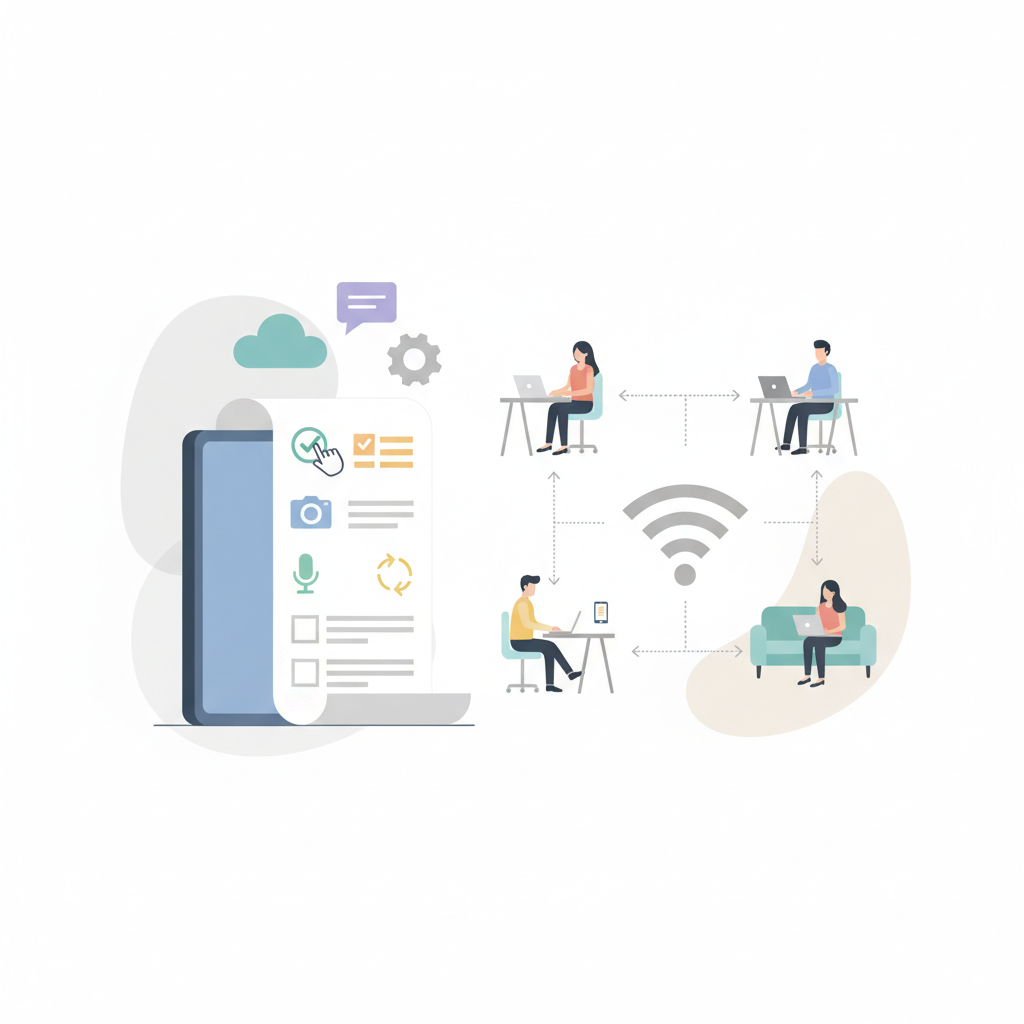
For HR teams managing distributed workforces, the challenge is not only legal compliance but operational consistency. Centralizing accommodation requests, documentation, and policy updates can help prevent drift across teams and states; any HR platform that supports those workflows becomes especially useful during periods of regulatory uncertainty. The key is to keep the process grounded in individual needs and current legal requirements, rather than waiting for a final federal rule to settle every question.
Originally published by XMF, inspired by publicly reported industry news.
Artificial intelligence has stopped being a future technology and quietly become part of everyday work. The evidence is not only in the tool
Artificial intelligence has stopped being a future technology and quietly become part of everyday work. The evidence is not only in the tools employees open on their laptops, but in the growing disconnect between what people actually do and what their job descriptions say they do. A recent industry survey asked HR leaders about that gap and found a striking result: ninety-five percent said employees are already using AI daily in roles where AI is nowhere in the official job description.
That number matters because it suggests organizations are not simply adding a few new technical jobs; they are seeing AI spread horizontally across marketing, finance, customer support, legal, operations and human resources. The workforce is changing faster than the documents and frameworks that are supposed to define it.
The gap between daily work and official roles
In many companies, the job description remains a static document written before generative AI became widely available. It may still describe a marketing coordinator as someone who drafts social copy, resizes images and updates campaign trackers. In practice, that same coordinator may use AI to generate first drafts, analyze engagement data, repurpose content and answer routine vendor questions. The work has become more strategic, but the formal role has not changed.
HR teams see similar patterns in finance, where analysts use AI to reconcile accounts or draft variance explanations; in legal, where contract review tools handle first-pass redlines; and in customer support, where agents rely on assistants to summarize tickets and suggest responses. None of these activities appear in many current job descriptions. As a result, performance reviews may ignore valuable new skills, training budgets may target the wrong needs, and compensation may not reflect the expanded scope of work.
Why hidden AI use is both a risk and an opportunity
The hidden nature of this adoption creates immediate risks. When employees use AI without formal guidance, organizations may not know how data is being handled, whether outputs are being verified, or whether confidential information is being entered into unapproved tools. Inconsistent use can also create quality gaps: one employee may produce polished, AI-assisted work while a colleague spends hours on the same task using manual methods. That inequality rarely shows up in headcount plans or job architectures.
At the same time, this shift is a clear signal of opportunity. Employees are not waiting for permission to improve their workflows. They are identifying repetitive tasks and finding ways to offload them. That appetite for productivity is valuable, especially for remote and hybrid teams where managers cannot observe every incremental behavior. The challenge is to move from informal, scattered AI use to a more intentional model that keeps the speed and flexibility while adding oversight, training and clear expectations.
What HR leaders can do next
The first step is to make hidden use visible. Anonymous surveys, team interviews and manager-led discovery can help map where AI is already part of the workflow. The goal is not to punish employees for using new tools, but to understand which tasks are changing and which skills are becoming more important.
From there, HR teams should update job descriptions and competency models to reflect AI-augmented work. That does not mean inserting “familiarity with AI” into every posting as a vague requirement. It means describing the actual responsibilities: using AI to draft and edit content, reviewing AI output for accuracy, protecting sensitive data, or supervising automated workflows. Job descriptions should clarify which decisions remain human and which tasks can be delegated to software.
Finally, organizations need to build the surrounding infrastructure. Training should focus on judgment, verification, data privacy and tool-specific skills. Hiring should assess how candidates think about AI, not only which tools they have used. And managers should discuss AI use openly in one-on-ones, performance reviews and team retrospectives, so that it becomes a normal part of role design rather than an underground practice.
The message from the survey is not that AI will replace every job. It is that job definitions are already out of date because employees have moved ahead of formal structures. Closing that gap is less about predicting the future and more about accurately describing the present. For organizations with remote and distributed teams, platforms like XMF can help track evolving skills and roles, but the larger task is cultural: leaders need to recognize the work that is already happening and build a more honest, flexible and well-governed people strategy around it.
Originally published by XMF, inspired by publicly reported industry news.