

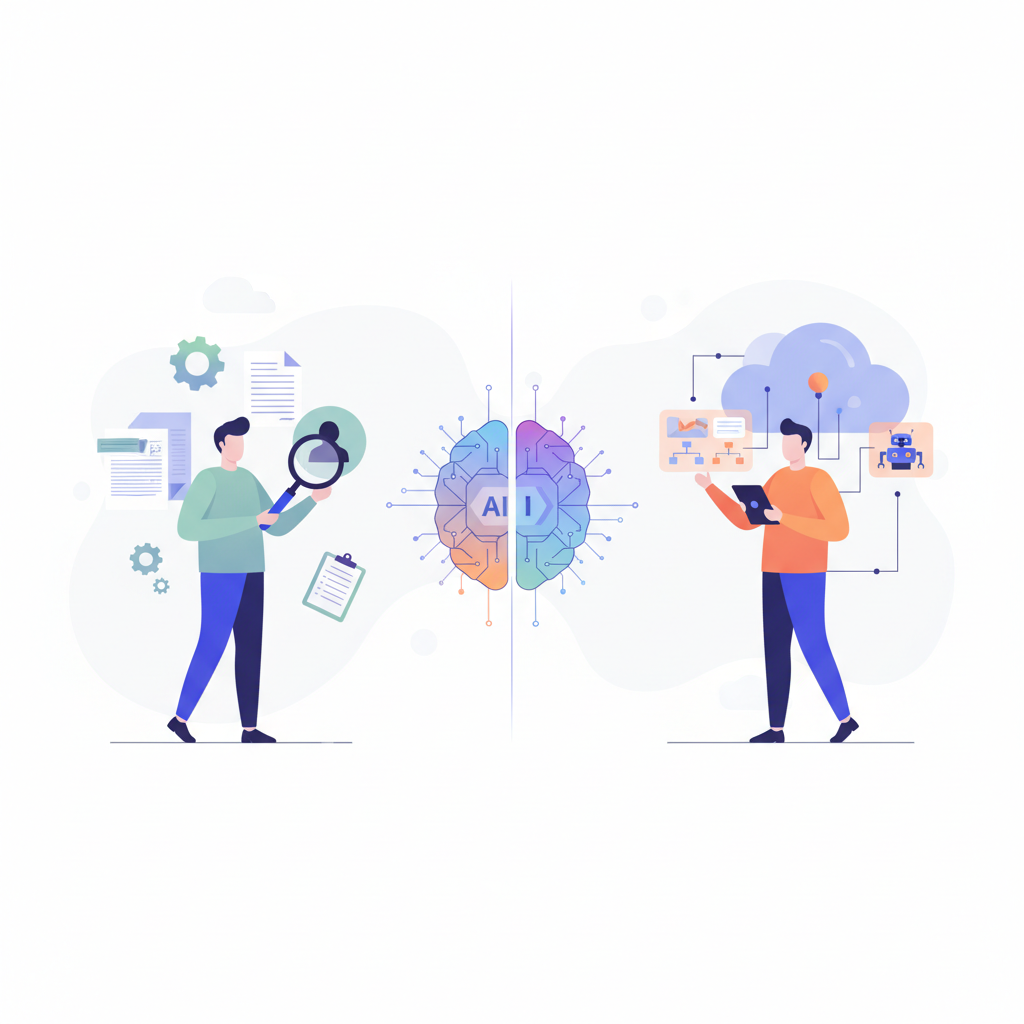
Artificial intelligence has moved from being a back-office experiment to a force that is redrawing the boundaries of human resources work. A recent study suggests the profession is not simply adopting AI; it is splitting into two distinct archetypes, each with its own priorities, skill sets and daily rhythms.
For years, the dominant question in HR was whether AI would replace jobs. The more nuanced reality is that it is changing how HR professionals identify themselves and where they add value. Some are gravitating toward the systems and data that make AI run, while others are leaning harder into the judgment-heavy, relationship-based work that remains stubbornly human.
The data-driven operator
The first archetype treats AI as the core of modern people operations. These HR professionals are becoming fluent in workforce analytics, automated sourcing, resume parsing, chatbot-supported employee queries and predictive attrition models. Their work often revolves around choosing the right tools, auditing algorithms for bias, cleaning data and explaining model outputs to legal and compliance teams.
In this role, the daily vocabulary shifts from engagement surveys to prompt design, API integrations, data pipelines and service-level agreements. The goal is scale: a single HR operator can now oversee hiring workflows, onboarding sequences and performance-review cycles across hundreds or thousands of employees. This archetype is not necessarily less human, but its leverage comes from building systems that reduce friction and delivery time.
That shift creates a real need for new competencies. Basic data literacy, statistical reasoning and the ability to question a vendor's model design are becoming as important as knowledge of labor law or compensation bands. The data-driven HR operator does not need to be a machine-learning engineer, but must be capable enough to spot when a tool is producing plausible-sounding but misleading answers.
The human-centered strategist
The second archetype moves in the opposite direction. As routine transactions become automated, some HR professionals are doubling down on work that algorithms cannot reliably perform: resolving complex employee relations issues, coaching managers through organizational change, shaping culture in hybrid teams and helping leaders make ethically sensitive decisions.
This group uses AI as an input, not as the main event. A chatbot may surface sentiment trends, but the human-centered strategist interprets those signals within context—knowing, for example, that a drop in engagement scores in one department may reflect a recent restructuring rather than a failure of company culture. Empathy, negotiation and long-term relationship building remain central.
For distributed and remote-first companies, this archetype matters even more. When employees are not sharing a physical office, trust is built through deliberate communication, clear expectations and managers who can read emotional cues across video calls and asynchronous messages. AI can flag anomalies, but it cannot replace the difficult conversation that prevents a small conflict from becoming a resignation.
Why the split requires deliberate integration
A clean separation between the two archetypes may sound efficient, but it carries risks. If the operational side becomes too insulated, HR can start optimizing for metrics that look good on a dashboard while missing the human consequences. If the strategic side ignores data, it may rely on intuition in situations where evidence would produce fairer, more consistent outcomes.
The strongest HR functions are likely to treat these two profiles as complementary rather than competing. That means building mixed teams where data-driven operators and human-centered strategists review AI outputs together, challenge each other's assumptions and share ownership of decisions. It also means developing enough cross-literacy that neither group can dismiss the other as out of touch or overly technical.
Leaders should be careful not to push every HR professional into the same mold. Some people will thrive as system builders; others will do their best work in high-stakes conversations. The organizations that gain the most from AI will probably be those that give both paths legitimacy, invest in shared governance and keep a clear line between what should be automated and what should remain human.
For HR teams supporting remote and hybrid workforces, this balance is especially delicate. Automation can handle time-off requests, document collection and onboarding checklists across time zones, but it cannot by itself create belonging or resolve the ambiguities of flexible work. A well-designed function will use AI to remove friction while making sure the human layer has the time and authority to act.
Originally published by XMF, inspired by publicly reported industry news.
 Likes 0
 Save
 Copy Link

 沪公网安备 31011702008840号
 Electronic Business License