

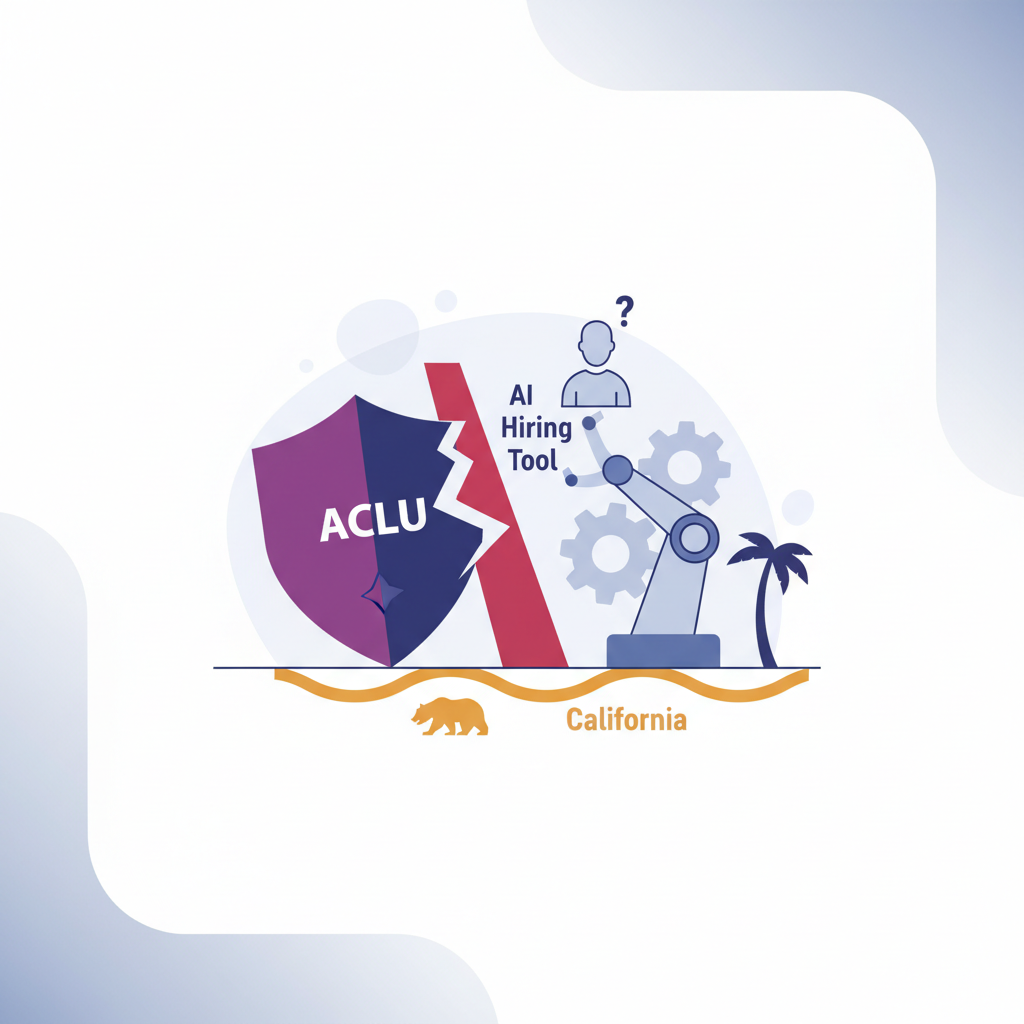
The rapid spread of AI-based hiring tools has reached a new legal flashpoint in California. The American Civil Liberties Union has filed a complaint over Emotify, an assessment platform used by employers to evaluate job candidates, according to HR Dive. The action adds to a growing body of challenges arguing that automated pre-employment tests can discriminate even when they look objective.
For HR teams, the case is a reminder that algorithmic hiring is not a compliance shortcut. Employers remain responsible for the tools they buy, the scores they rely on, and the candidates who get screened out before a human reviewer ever sees their application.
Why automated assessments are under scrutiny
Hiring assessments often promise to reduce human bias by applying consistent criteria to every applicant. But consistent scoring does not guarantee fair outcomes. If a tool has been built from data that reflects past hiring patterns, it can reproduce historical bias at scale. If it analyzes language, tone, response time, or emotional cues, it may penalize candidates whose communication style differs from the profile the model was designed to reward.
That is especially concerning for remote and hybrid hiring, where an automated assessment may be the only structured signal an employer collects. Candidates with disabilities, neurodivergent applicants, non-native English speakers, and people from underrepresented backgrounds can be scored down for reasons that have little to do with their ability to perform the job. In a traditional process, a skilled interviewer might notice those nuances. In an automated funnel, the rejection may be invisible and unexplained.
What the California complaint signals
The ACLU's move in California matters beyond a single vendor. California has some of the strongest workplace protections in the United States, and state regulators have shown a willingness to investigate how hiring algorithms affect protected groups. Because remote hiring routinely crosses state and national borders, a California-focused complaint can influence how employers everywhere design and monitor their selection systems.
The challenge also reflects a broader regulatory trend. New York City already requires bias audits for many automated employment decision tools, and the European Union's AI Act classifies some employment-related AI systems as high risk. The common thread is the same: employers cannot simply trust a vendor's claim that a test is fair, valid, or free from bias.
Practical steps for HR and recruiting teams
First, map every automated tool in the hiring process. Identify which vendors are screening, scoring, ranking, or rejecting candidates, and ask for documentation on what the tool measures and how it was validated. A credible vendor should be able to explain the link between assessment outputs and job-relevant performance.
Second, preserve human oversight. Automated scores should inform decisions, not make them silently. If a candidate is deprioritized because of an assessment result, there should be a clear record, a path for human review, and a way for candidates to request an alternative evaluation or reasonable accommodation.
Third, run regular audit checks. Review pass rates across gender, race, age, disability status, and language background. Look for unexplained drops at any stage of the funnel. The goal is to catch patterns early, before they become a formal complaint or a reputational crisis.
The Emotify case may be an early signal of more challenges to AI-driven hiring. For employers operating in remote and flexible work environments, the lesson is simple: technology can make hiring faster, but it cannot outsource fairness. Legal accountability stays with the organization that makes the final call.
Originally published by XMF, inspired by publicly reported industry news.
 Likes 0
 Save
Save
 Copy Link



 沪公网安备 31011702008840号
 Electronic Business License