

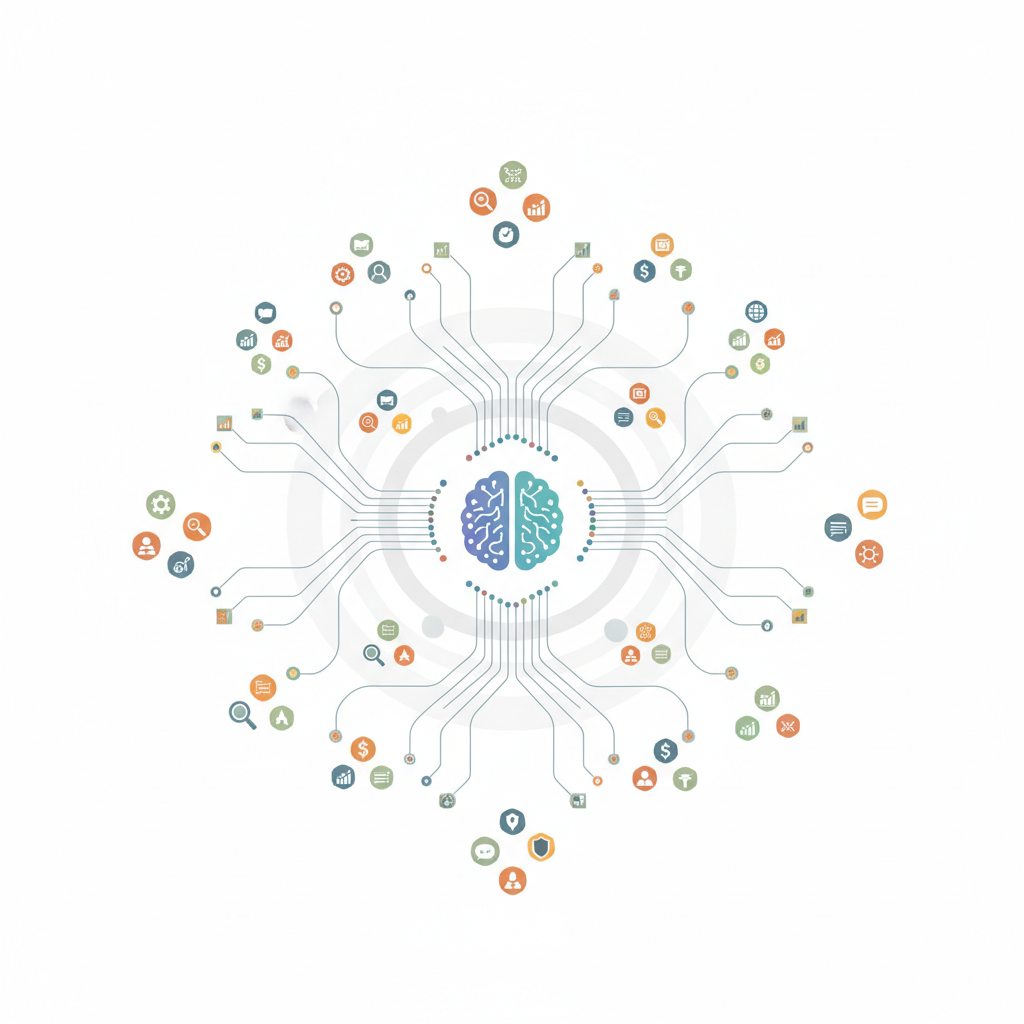
Anthropic has introduced dynamic workflows in Claude Managed Agents, a capability that lets a single lead AI agent break a complex assignment into smaller tasks and distribute them across as many as 1,000 sub-agents running in parallel. The announcement marks a significant step beyond simple chatbots or single-task automation: instead of asking one model to do one job, organizations can now instruct one agent to plan, delegate, and reconcile work across a large digital workforce.
From single assistant to workflow orchestrator
Traditional AI assistants typically complete one request at a time. They may draft an email, summarize a document, or screen a resume, but they usually do not coordinate multiple streams of work simultaneously. Dynamic workflows change that model. A lead agent receives a broad objective, decides how to divide it, assigns pieces to sub-agents with different instructions or tools, and then combines the results into a final output. Because this decomposition happens at runtime, the system can adapt to the shape of the task rather than following a rigid pre-set script.
For remote and hybrid teams, this has practical appeal. A distributed team might use a lead agent to gather input from multiple sources, check consistency across documents, or monitor a project board in real time. The agents operate around the clock and across time zones, which can reduce bottlenecks that usually wait for a human coordinator. However, the technology is still maturing. Orchestration creates new points of failure: if the lead agent assigns the wrong sub-task or misinterprets a result, the final output can be confidently wrong.
Why this matters for HR and business operations
HR departments and people operations teams often handle high-volume, repetitive processes: screening applications, verifying credentials, scheduling interviews, answering employee questions, and updating records. Multi-agent workflows could eventually support these functions by splitting large batches of candidates across specialized agents that check different criteria in parallel. One agent might assess role fit, another might flag missing documents, and a third might draft follow-up messages. The lead agent would then compile a shortlist for human review.
That human review remains essential. AI agents can extract information quickly, but they can also misunderstand context, overlook nuance, or amplify biased patterns if not carefully monitored. In organizational settings, automation should reduce administrative load, not replace accountability. Business leaders should ask vendors how agent decisions are logged, how errors are detected, and whether a human can interrupt or override a workflow at any stage.
Productivity gains come with control requirements
The promise of 1,000 parallel agents is not simply about doing one task faster; it is about running many related tasks at once without multiplying human oversight in the same proportion. A manager who previously tracked five workflows might now monitor one orchestration layer. That could be valuable for lean HR teams, distributed operations, and fast-growing companies with limited back-office staff.
Still, organizations should proceed with guardrails. Parallel agents can consume budget rapidly, produce inconsistent outputs, and create security or privacy risks if they handle employee data or candidate information. Clear role boundaries, access controls, and audit trails are necessary. Testing with small, low-risk tasks should come first. As platforms like XMF continue to connect remote professionals with flexible work, they may eventually help teams apply this kind of orchestration to recruiting, onboarding, and project coordination without losing the human judgment that remote work depends on.
In short, the arrival of dynamic agent workflows is a useful signal for HR and business leaders. It is not yet a turnkey replacement for human coordination, but it points toward a workplace where AI handles more of the operational mesh between people, systems, and deadlines. The organizations that benefit most will be those that treat orchestration as a managed capability, not an unsupervised one.
Originally published by XMF, inspired by publicly reported industry news.
 Likes 0
 Save
Save
 Copy Link



 沪公网安备 31011702008840号
 Electronic Business License