

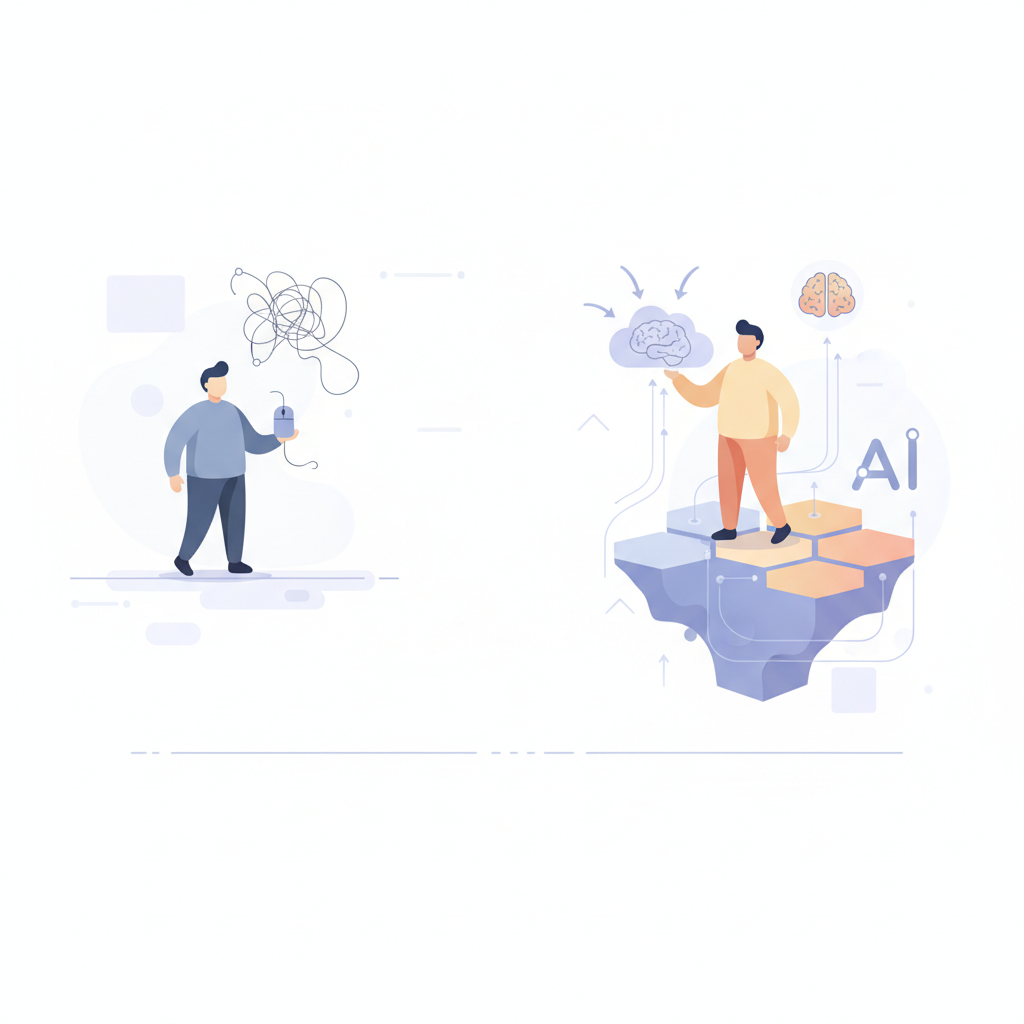
New research from PwC suggests the most consequential divide in the modern workplace is no longer between office and remote, or between technical and non-technical roles. It is between workers who are building real fluency with artificial intelligence and those who are not. As generative AI moves from novelty to daily utility, that gap is becoming a powerful predictor of productivity, career progression, and day-to-day job satisfaction.
A Divide That Goes Beyond Access
Earlier debates about the digital divide focused on who had a laptop, reliable internet, or access to software. Those barriers have not disappeared, but they are no longer the whole story. According to the PwC findings, workers who use AI regularly and confidently are pulling ahead of colleagues who use the same tools rarely or only in shallow ways. The split is not simply between engineers and everyone else. It cuts across marketing, finance, operations, customer support, and HR itself.
What separates the two groups is less about formal training than about daily practice. Employees who treat AI as a collaborative partner are learning to delegate repetitive work, iterate on ideas faster, and focus on judgment-intensive tasks. Colleagues who remain occasional users often see AI as a search box or a drafting shortcut, which limits the value they extract. Over time, even small differences in usage patterns turn into large differences in output and confidence.
Why The Gap Compounds Quickly
AI capability is not a static credential. It grows through iteration. A worker who uses AI every day builds an intuitive sense of what the tools can and cannot do, where they need human review, and how to combine AI outputs with domain expertise. That practical judgment is difficult to teach in a one-off workshop. Employees who start experimenting early tend to get better assignments, which create more opportunities to practice, which deepens their skill advantage further.
This flywheel effect can be especially pronounced in remote and hybrid teams. In a shared office, colleagues observe each other working, ask quick questions, and pick up new methods informally. In distributed work, those moments of incidental learning are rarer. Without deliberate structures, remote workers may be left to figure out AI adoption alone. Some will invest the time; others will fall behind simply because the behavior is not visible or encouraged. HR teams need to create deliberate spaces for sharing prompts, workflows, and lessons across the organization.
What HR Leaders Should Do Now
The PwC research is a call for HR leaders to move beyond generic AI literacy programs. Broad awareness training is useful for setting a baseline, but it does not close a skills divide. Employees need role-specific practice, safe environments to experiment, and regular feedback. A recruiter, a financial analyst, and a customer service agent will use AI in very different ways. Learning programs should reflect that variety.
Organizations should also measure skills more carefully. Self-reported confidence is not the same as demonstrated capability. Skills inventories, practical assessments, and project-based evaluations can help HR see where gaps are forming before they become harder to reverse. Performance management should recognize AI-enabled improvements in quality and speed, rather than treating AI use as a shortcut or a threat.
Finally, leaders need to address the emotional dimension of the divide. Many employees are not avoiding AI because they are lazy or resistant to change. They are unsure whether their expertise will still be valued, whether they have time to learn, or whether automation will reduce their role. Transparent communication about how AI will be used, what skills will matter, and how the organization will support development can reduce anxiety and increase participation. For distributed teams, tools like XMF can help HR map skills and deliver targeted development, but the real shift depends on leadership and culture.
The AI skills divide is not inevitable. It is the result of uneven adoption, uneven support, and uneven opportunity to practice. Companies that treat AI fluency as a workforce-wide capability, rather than a specialist skillset, will be better positioned to keep their teams engaged, productive, and ready for what comes next.
Originally published by XMF, inspired by publicly reported industry news.
 Likes 0
 Save
Save
 Copy Link

 沪公网安备 31011702008840号
 Electronic Business License