

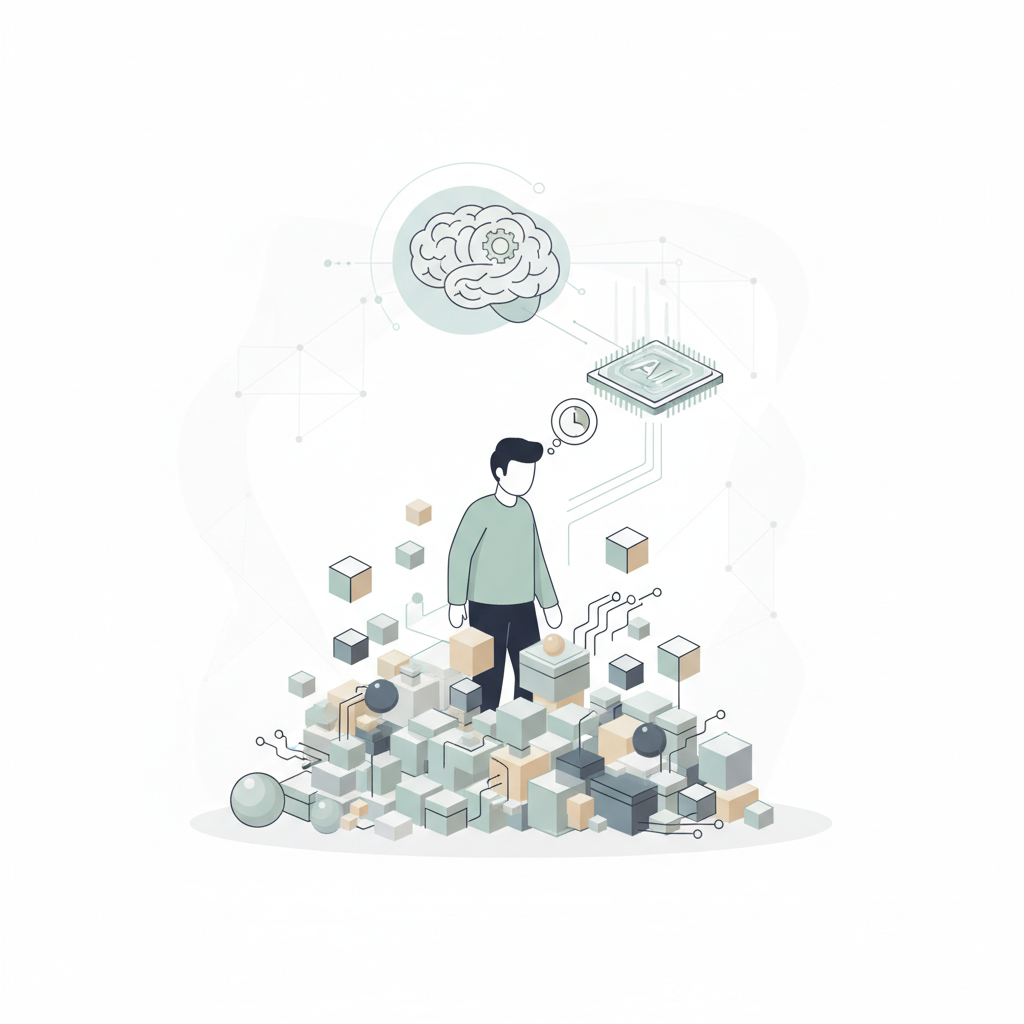
Artificial intelligence is often sold to HR leaders as a way to remove repetitive work: screening resumes, answering routine employee questions, drafting job descriptions, summarizing performance notes. But a growing number of chief human resources officers are pointing to a less visible consequence. As AI settles into daily operations, it does not simply erase tasks. It shifts them, creating new forms of behind-the-scenes labor that rarely appear on a project plan or a productivity dashboard.
That theme surfaced recently in HR Dive’s weekly numbers roundup, where CHROs observed that AI is generating what they describe as “invisible” work. The pattern is familiar: automation handles the obvious step, while people absorb the edges—reviewing outputs, fixing errors, managing exceptions, and reassuring employees who are unsure how to use the new tools. For HR teams already stretched across compliance, recruiting, and employee relations, this hidden workload is becoming a strategic concern.
The hidden tasks behind the automation
Invisible AI work takes many forms. A recruiting team may deploy a screening tool that quickly filters hundreds of applications. But then someone has to check whether the algorithm is rejecting candidates for reasons that could create legal risk. Someone has to respond when a qualified candidate is flagged in error. Someone has to document why decisions were made, even when the system’s reasoning is opaque.
Similarly, an HR chatbot can reduce the number of routine emails about vacation balances or benefits eligibility. Yet the conversations that do arrive are often the complicated ones: exceptions, edge cases, and employees who cannot get a straight answer from a bot. Those issues land with human staff, frequently without being counted as a separate workload. Meanwhile, HRIS teams spend hours cleaning data, updating knowledge bases, and testing prompts to keep the tools useful.
This is not the kind of work that appears in a business case for AI. It is fragmented, interruptive, and often invisible to leadership because it happens in small increments across many roles. Over time, though, those increments add up. CHROs report that the people doing this hidden labor are often senior team members, precisely the people whose time is most valuable and most difficult to replace.
Why the burden is hard to measure
One reason invisible work remains invisible is that organizations rarely design metrics for it. A hiring manager may save ten minutes per screening, but a recruiter may spend an extra thirty minutes handling false positives and candidate appeals. A shared services center may close tickets faster, while an HR business partner fields informal questions from managers who do not trust the new system. Because these tasks are scattered, they do not show up in a single cost center or productivity report.
CHROs also note that AI-related work is often cognitive rather than transactional. It involves judgment, interpretation, and emotional labor. Employees who are anxious about AI monitoring or uncertain about how their data is used bring those concerns to HR. Those conversations are essential, but they are rarely logged as AI operating costs. If leaders only measure the hours saved by automation, they may miss the hours created by adaptation.
That gap has practical consequences. Teams that underestimate the support burden may find themselves falling behind on core responsibilities. Burnout can rise quietly, particularly among HR operations staff who absorb the exceptions. And when the technology fails or produces a biased outcome, the cleanup effort can be intense, pulling people away from proactive work.
Making the invisible workload manageable
HR leaders do not need to reject AI to address this issue. They need to make the hidden work visible and assign it deliberately. That starts with simple changes: track time spent on AI-related fixes for a few weeks, create a log of exceptions, and ask employees where they are stepping in to correct or explain automated decisions. Even rough data can reveal patterns that justify additional headcount, training, or tool adjustments.
It also helps to designate clear owners for AI quality, change management, and employee communication. If no one is responsible for maintaining the knowledge base or reviewing screening outcomes, the work will still happen—but it will happen unpredictably. HR teams can build AI governance into role descriptions and project plans, ensuring that support tasks are recognized rather than absorbed by default.
Finally, organizations should evaluate AI projects on net workload, not just speed. A tool that saves recruiters time but pushes more complexity onto HR business partners may still be worth using, but only if leaders understand that trade-off. For remote and hybrid teams, where communication already requires extra coordination, this hidden work can be especially costly. A central platform can help HR teams track requests, assign follow-ups, and keep AI-related tasks from falling through the cracks—an approach that fits the way modern, distributed HR teams operate.
The lesson from CHROs is not that AI is failing. It is that the technology changes work more subtly than a simple before-and-after calculation suggests. HR leaders who recognize and plan for invisible work will be better positioned to capture AI’s benefits without quietly overwhelming their own teams.
Originally published by XMF, inspired by publicly reported industry news.
 Likes 0
 Save
Save
 Copy Link


 沪公网安备 31011702008840号
 Electronic Business License