

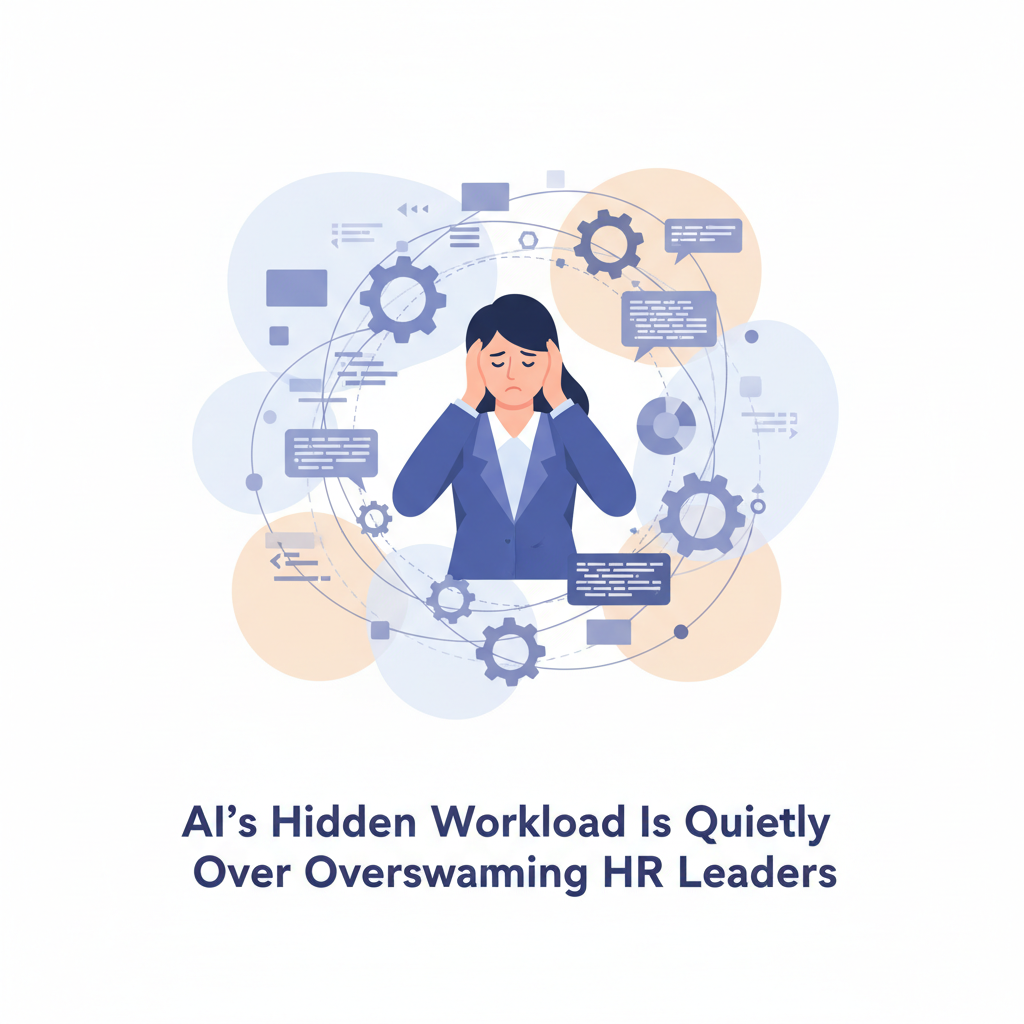
Artificial intelligence is often sold as a way to give HR teams back their time. But a growing number of chief human resources officers are describing a more complicated reality: AI is creating a layer of new, unmeasured tasks that sit outside formal job descriptions and project plans. Prompting models, cleaning outputs, checking facts, rewriting drafts, responding to employee confusion, and updating internal policies all take hours. This “invisible work” is becoming one of the more quietly discussed side effects of AI adoption in people operations. The mismatch is not about rejecting AI; it is about accounting for the human effort that surrounds it.
The Gap Between Automation and Efficiency
Automation removes steps, but it rarely removes all human involvement. Instead, it moves effort. A recruiter who once wrote job descriptions from scratch now spends time engineering prompts, reviewing AI-generated language for tone and legal compliance, and verifying that the output matches the hiring manager’s intent. A payroll specialist may no longer key in every figure, but must now monitor algorithm outputs, investigate anomalies, and answer questions from employees who do not fully trust an automated pay process. These activities happen in the margins of existing workflows. They are rarely labeled as “prompt quality assurance” or “output review” in performance metrics, so they remain invisible to leaders who only see the final result.
Why HR Teams Carry a Hidden Burden
The issue is especially pronounced in people operations because HR decisions involve sensitive data and regulatory risk. When an AI tool screens candidates, drafts performance summaries, or assists with compensation recommendations, a human still has to check for bias, explain decisions, and handle exceptions. That oversight work is not optional, but it is seldom included in the business case for AI. CHROs report that teams are absorbing this additional layer without extra headcount or adjusted expectations. Over time, the hidden workload can erode the efficiency gains the technology was supposed to create, leaving employees fatigued and skeptical of AI systems that were meant to help them. In many cases, the people doing this invisible work are the same HR professionals who were early advocates for the technology, so their concerns can be misread as resistance rather than operational insight.
Making the Invisible Visible
Organizations that want to use AI responsibly should treat adoption as a work redesign project, not simply a software rollout. Leaders can map the full lifecycle of an AI-assisted task: who prepares the input, who checks the output, who fixes errors, and who communicates the result. These steps should be named, assigned, and counted. Job descriptions can be updated to include AI oversight responsibilities, and performance reviews can recognize that validation and correction work has real value. Teams also need space to document recurring AI failures and share fixes, so the same invisible work is not repeated in every corner of the company.
For remote and distributed teams, where informal conversations are less visible, this discipline matters even more. Managers may not notice the extra hours spent reconciling AI outputs because the work happens quietly at someone’s desk. A short team check-in or a shared workflow note can surface what would otherwise stay hidden. Some organizations are also creating lightweight AI operations roles or rotating oversight duties so the burden does not fall on a few early adopters. As companies refine their AI strategies, platforms like XMF can help distributed HR teams track such oversight tasks and balance workloads, though the first step is simply acknowledging that invisible work exists.
AI will continue to reshape HR work, but the organizations that benefit most will be those that measure not only what AI saves, but also what it adds. Naming the hidden work is not resistance to technology; it is the foundation for sustainable adoption.
Originally published by XMF, inspired by publicly reported industry news.
 Likes 0
 Save
Save
 Copy Link



 沪公网安备 31011702008840号
 Electronic Business License