

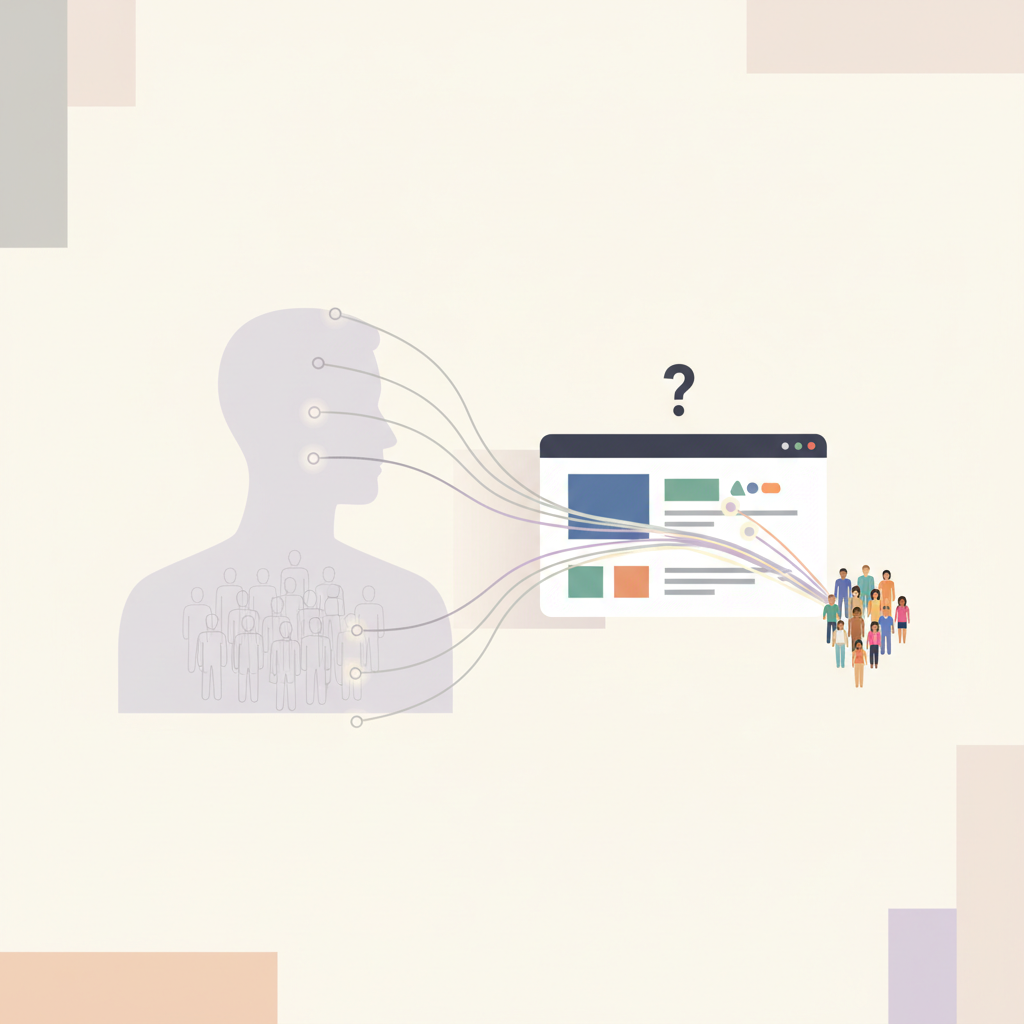
When a well-qualified woman scrolls past a job posting without applying, the reason is not always salary, location, or role mismatch. Increasingly, HR researchers are pointing to a quieter factor: the faces and voices a company chooses to put forward. If a careers page, job ad, or leadership spotlight consistently shows men in the roles being advertised, many women read that as a signal that they do not belong. The result is a shrinking applicant pool that no amount of outreach can easily fix.
The Visual Cues That Quietly Filter Applicants
Job seekers rarely read a posting in isolation. They click through to the company’s careers page, scan team photos, watch a culture video, or browse employee testimonials on LinkedIn. These images are processed quickly, often unconsciously. When every technical or leadership role appears to be held by a man, women may infer that their gender is not typical in that environment. Social identity research suggests people avoid settings where they expect to feel like outsiders, even if their skills are a strong match. The absence of representation is therefore not a neutral fact; it is an active message about who is welcomed and who is not.
The effect is especially strong in fields where women are already underrepresented. A software engineering opening with a page filled only with male developers may confirm a stereotype that already exists. For some candidates, this is not about overt discrimination but about the exhaustion of having to prove belonging before they even apply. Employers who say “women just don’t apply” may be overlooking how their own employer brand has narrowed the funnel.
Beyond the Pipeline: Rethinking the Application Gap
A common explanation for a lack of female applicants is a pipeline problem: too few women study certain subjects or enter certain industries. While pipeline constraints are real in some sectors, they do not explain every vacancy. The same pool of qualified women may respond differently to two versions of the same job. One version may feature an all-male team photo and language that emphasizes dominance and aggression. Another may show a mixed-gender team and describe collaboration and problem-solving. Even subtle changes can shift application rates.
HR teams should also consider that representation is not only about gender balance in photos. It includes who speaks in videos, who is named in employee stories, and which employees are highlighted as role models. If a company’s only female featured story is about an administrative assistant while all engineering interviews feature men, the message is clear. Qualified women may not self-select out of the role itself; they may simply decide the organization is not ready for them.
Practical Audits for Recruiting Teams
Fixing this does not require a major rebrand. Recruiting and HR leaders can start with a simple audit. Review the last ten job ads, careers page images, and social media posts aimed at candidates. Count how often women appear, in what roles, and whether they are shown as peers or as support staff. Look for patterns in language: words like “competitive,” “rock star,” or “dominant” may appeal to a narrower audience, while inclusive language can widen the pool without lowering standards.
Next, involve employees. Request short testimonials from women in technical, operational, and leadership roles. Use their real photos and titles rather than stock images. Authenticity matters: candidates can tell when a photo is staged or when a company is tokenizing one employee. Better to show three genuine examples than a dozen generic images. Finally, measure results. Track applicant demographics by source and experiment with different ad versions. A small change to a job title, image, or description can reveal how much representation was shaping the outcome.
For employers hiring remote or distributed teams, representation extends beyond the office. The images on a remote-first careers page still shape perceptions, and flexible hiring platforms can help companies reach candidates who might otherwise never see the posting. A platform like XMF, which connects businesses with flexible and remote talent, can broaden the top of the funnel, but the employer brand still has to make candidates feel they belong once they arrive.
Representation may feel like a soft issue, but its impact on the applicant pool is measurable. When women see a plausible version of themselves inside an organization, they are more likely to apply, to stay, and to recommend it. For HR teams trying to close gender gaps, auditing the images and words around a vacancy is not an afterthought—it is one of the most direct levers available.
Originally published by XMF, inspired by publicly reported industry news.
 Likes 0
 Save
Save
 Copy Link


 沪公网安备 31011702008840号
 Electronic Business License