

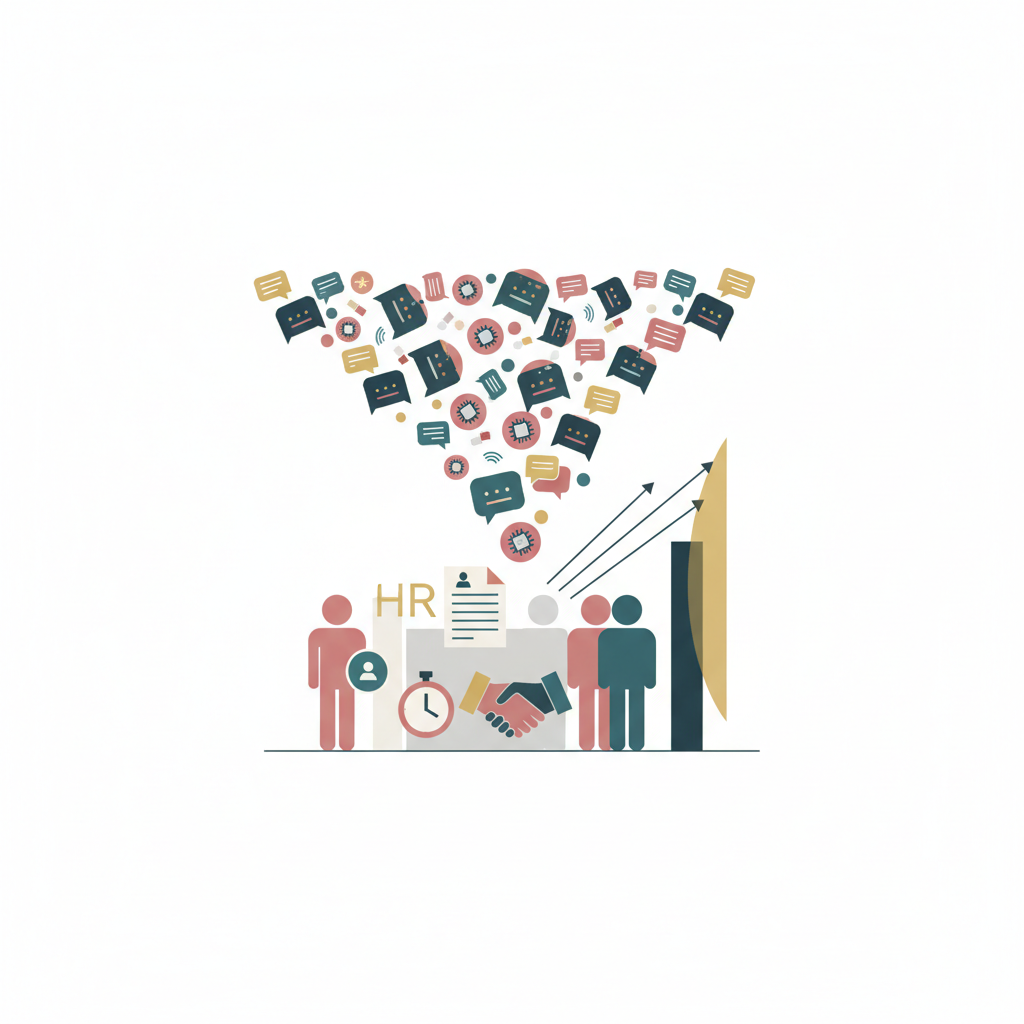
AI-powered meeting assistants have moved from novelty to default in many organizations. They join video calls, transcribe conversations, summarize action items, and promise to free employees from note-taking. In HR, however, the convenience arrives with a distinct set of risks. The same tool that captures a routine hiring debrief can also record a confidential discussion about a disciplinary case, a medical accommodation, or a salary adjustment. HR teams are increasingly expected to use these tools, but experts caution that adoption without clear boundaries can undermine employee trust and create legal exposure.
The Real Appeal of Automated Notes
The case for AI notetakers is straightforward. Meetings are frequent, documentation is uneven, and human notes often miss key details. An AI assistant can produce a searchable record, highlight decisions, and reduce the administrative burden on HR generalists and recruiters. In distributed and hybrid teams, where participants may be spread across time zones, a consistent summary helps keep everyone aligned without relying on one person’s memory.
For HR specifically, better documentation can improve consistency in hiring panels, performance reviews, and employee relations cases. When notes are accurate and standardized, HR professionals spend less time reconstructing what was said and more time addressing issues. That operational benefit is real, and it explains why many people teams are pushing for wider use of notetakers rather than banning them outright.
Where HR Needs to Draw the Line
The difficulty is that not all meetings are appropriate for automated capture. HR conversations often involve sensitive personal data, including health information, family circumstances, and protected characteristics. Recording and storing these discussions creates a record that may be subject to data protection rules, employee access requests, or discovery in legal disputes. If an AI tool retains audio, transcripts, or summaries by default, HR may be creating liability without intending to.
Employee consent is another boundary. In many jurisdictions, recording a conversation requires notice and, depending on local law, affirmative consent. An AI notetaker that silently joins a call can feel like surveillance, especially if employees are not told what is being captured, how long it is kept, and who can access it. Even when consent is obtained, HR must consider power dynamics: an employee in a performance review may not feel free to decline a recording requested by their manager.
There are also practical risks. AI transcription is not perfectly accurate, particularly with accents, overlapping speech, or industry jargon. A flawed summary in an HR file can become the basis for a later decision or grievance. If HR treats the AI output as authoritative without human review, a single misheard phrase can escalate into a formal dispute.
Turning Caution Into Policy
Experts say HR should not reject AI notetakers, but should set explicit rules before deployment. A useful policy covers which meeting types are eligible for automated notes, which require human note-taking, and which should not be recorded at all. For example, routine project updates or recruiting kickoff calls may be low risk, while disciplinary hearings, exit interviews, and accommodation discussions should usually remain AI-free by default.
The policy should also define retention. Meeting recordings and transcripts should not live indefinitely in an AI vendor’s cloud storage. HR and IT teams need to agree on deletion schedules, access controls, and vendor data processing terms. Employees should know when a notetaker is active, what it captures, and how to request a copy or deletion of their data. In unionized or highly regulated environments, HR should consult legal and employee representatives before introducing the tools.
Training matters as much as policy. Managers who enable a notetaker during a sensitive one-on-one may not realize the implications. HR teams that use AI outputs in investigations or performance documentation need clear guidance on verifying accuracy and marking AI-generated summaries as such. The goal is not to ban the technology but to ensure it serves HR’s obligation to be fair, transparent, and trustworthy.
For HR leaders, the question is no longer whether AI notetakers will be used, but whether the organization has the guardrails to use them responsibly. The tools are improving quickly, yet the human judgment required to decide when not to use them is becoming more valuable, not less.
Originally published by XMF, inspired by publicly reported industry news.
 Likes 0
 Save
Save
 Copy Link

 沪公网安备 31011702008840号
 Electronic Business License