

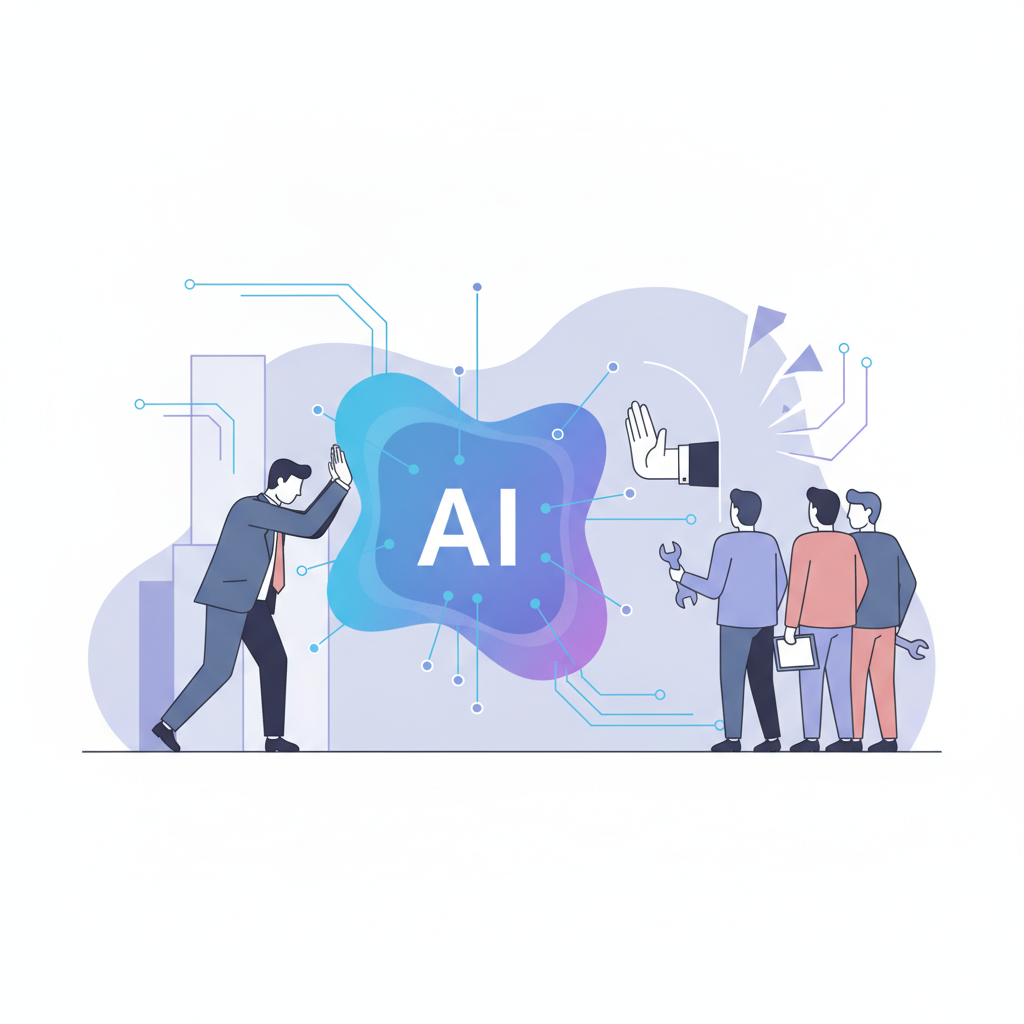
Artificial intelligence is reshaping how work gets done, but a growing body of evidence suggests that many employees feel like passengers on a journey they did not choose. While executives announce pilots, roll out assistants, and reimagine workflows, workers often report that they do not understand what these changes mean for their daily tasks, their performance expectations, or their long-term prospects.
This disconnect is not simply a communication hiccup. It is a strategic risk that can slow adoption, reduce trust, and push talented people to look for employers who treat them as participants rather than bystanders.
The adoption gap is wider than leaders think
Leadership teams often assume that if a tool is available, employees are using it — and if a strategy has been announced, employees have absorbed it. In practice, the gap between organizational AI maturity and individual AI readiness remains significant. Research from workforce surveys involving frontline and knowledge workers alike shows that many employees have not received clear guidance about which AI tools are approved, how their roles will change, or what new skills will be valued.
Some workers discover AI-driven changes through informal channels: a colleague mentions a new dashboard, a manager changes a workflow, or a performance metric shifts without explanation. Others hear about AI only through company-wide emails that focus on efficiency and transformation but offer little practical detail. For remote and hybrid employees, this problem can be even more acute, because they have fewer hallway conversations and ad hoc briefings to fill in the gaps.
Why silence fuels anxiety and resistance
When information is scarce, people do not remain neutral. They speculate. Employees who sense that automation is arriving but have no clear picture of its scope often default to worst-case thinking: their job will be eliminated, their expertise devalued, or their workload increased without additional support. That mindset can trigger quiet resistance, lower engagement, and reluctance to experiment with new tools.
Anxiety is not a sign that employees are anti-technology. In most cases, it is a response to ambiguity. Workers who understand why a tool is being introduced, what problems it will solve, and how it will affect their responsibilities are far more likely to engage with it constructively. Conversely, when change feels done to them rather than with them, even useful tools can be met with cynicism.
This is particularly relevant for frontline and operational roles, where AI may alter shift scheduling, task allocation, quality checks, or customer interactions. Without a deliberate communication strategy, those employees may experience the disruption without ever seeing the intended benefit.
From top-down mandates to two-way communication
HR leaders and people managers have a central role in closing this gap. AI adoption should be treated as an organizational change initiative, not merely a technology project. That means involving employees early, explaining the rationale in plain language, and creating structured opportunities for questions and feedback.
Effective communication does not need to be polished or exhaustive. It needs to be honest, consistent, and relevant. Employees want to know what is changing, when it will affect them, what support is available, and how decisions about job design will be made. Managers should be equipped to have these conversations, because they are often the most trusted source of information for their teams.
Skills development also matters. AI literacy should not be reserved for technical staff. Short, practical learning modules — focused on how a specific tool works, how to prompt effectively, how to verify outputs, and how to flag risks — can reduce fear and build confidence. Training should be linked to real workflows so that employees can immediately apply what they learn.
Turning uncertainty into readiness
Organizations that communicate well about AI tend to see faster adoption and healthier employee sentiment. They use pulse surveys, team meetings, and feedback channels to understand where confusion or resistance is concentrated. They adjust their messaging based on what they hear. They recognize that readiness is not a single announcement but an ongoing conversation.
For remote and flexible teams, this conversation must be designed for asynchronous environments. Written updates, recorded walkthroughs, and accessible FAQs can help ensure that employees in different time zones and work arrangements receive the same quality of information. For platforms that support flexible staffing and distributed work, such as XMF, clear communication about role expectations and skill changes is especially important as AI reshapes the boundaries of many jobs.
The companies that navigate AI disruption most successfully will not necessarily be those with the most advanced tools. They will be the ones that bring their people along — with clarity, respect, and a genuine commitment to shared progress.
Originally published by XMF, inspired by publicly reported industry news.
 Likes 0
 Save
Save
 Copy Link

 沪公网安备 31011702008840号
 Electronic Business License