

Mark Zuckerberg’s latest manifesto on artificial intelligence paints a future that is at once optimistic and unsettling for the world of work. In a detailed public statement, the Meta CEO argued that AI will not lead to mass unemployment but will instead create more jobs than it destroys—while simultaneously enabling companies to do more with fewer people. This apparent contradiction sits at the heart of a vision that every HR leader, remote worker, and business strategist needs to understand sooner rather than later.
The Jobs Paradox: More Roles, Fewer People
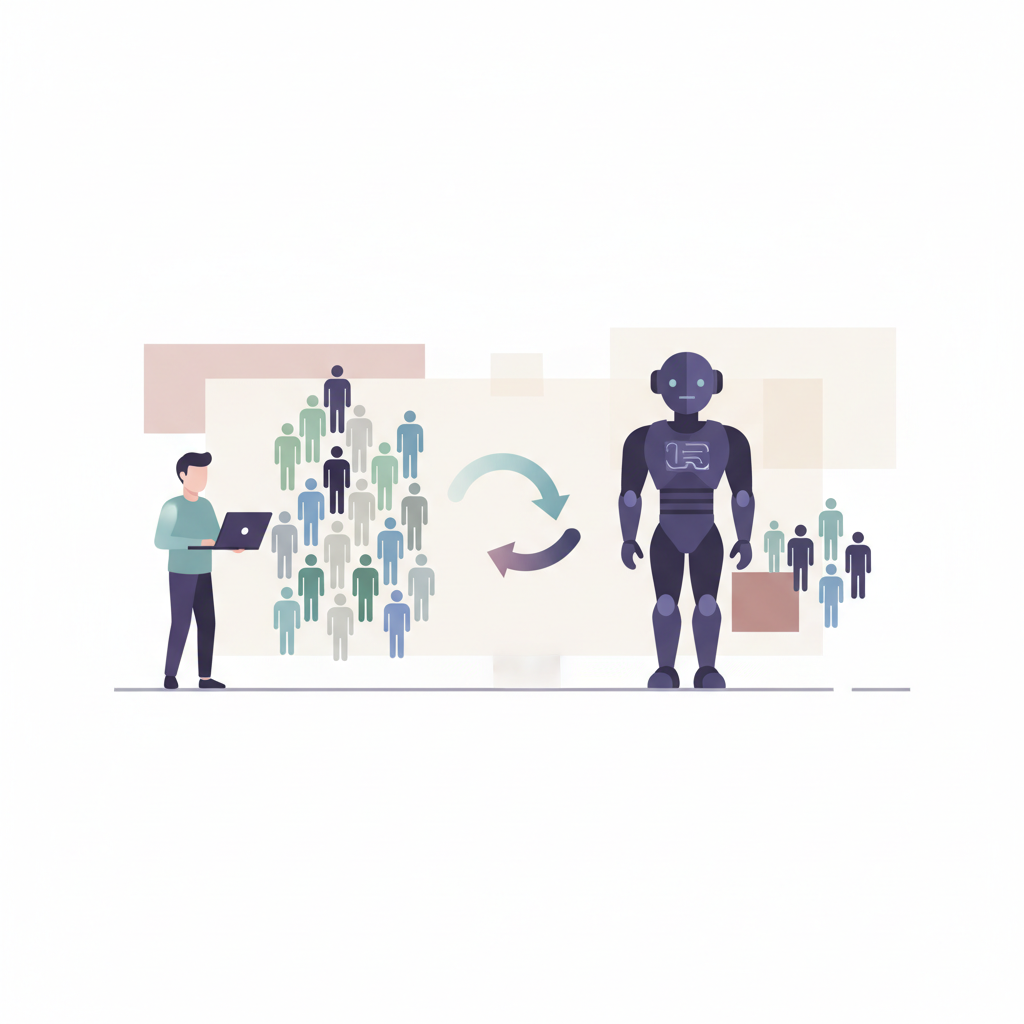
Zuckerberg’s forecast hinges on a distinction that is easy to miss. When he says AI will generate “more jobs,” he does not necessarily mean more total headcount inside each organization. Instead, he anticipates the emergence of entirely new categories of work—roles that revolve around training, fine-tuning, and managing AI systems, as well as jobs that combine human creativity with machine efficiency. The twist is that the same technology makes existing processes so much more productive that a single employee can accomplish what once required a team. In practice, a company might double its output while reducing its full-time workforce by a third.
For HR professionals, this means the talent equation is being rewritten. Hiring will shift from filling seats to sourcing hyper-specialized skills, often on a project basis. The traditional model of a stable, growing employee base may be replaced by a leaner core of employees augmented by a fluid network of AI tools and contingent experts. The idea that AI is a net job creator is comforting, but it only holds if businesses and workers adapt at an extraordinary pace.
Personal Superintelligence: The Ultimate Digital Assistant
A key concept in Zuckerberg’s vision is “personal superintelligence”—AI agents that function as deeply knowledgeable, round-the-clock collaborators for every individual. These assistants would handle scheduling, data analysis, content generation, and even complex decision support. In a remote or hybrid setting, such tools could radically level the playing field, enabling a distributed workforce to operate with the same coherence and speed as a co-located team.
Yet there is a catch: when every employee carries a supercharged digital twin, the bar for what counts as “just doing your job” will rise dramatically. The competitive advantage of simply being hardworking or knowledgeable will diminish. Instead, value will flow to those who can ask the right questions, interpret AI-generated insights with nuance, and bring emotional intelligence to bear on ambiguous situations. For talent development, this means soft skills, critical thinking, and ethical judgment become non-negotiable, while many routine cognitive tasks disappear from human job descriptions entirely.
What HR Leaders Should Do Now
This isn’t a distant future. Early adopters are already embedding generative AI into recruitment, onboarding, and performance management. The vision Zuckerberg lays out suggests that HR itself will be deeply transformed. Automated sourcing and screening will accelerate, but the real value of HR will move toward strategic workforce design, upskilling initiatives, and maintaining culture in a hybrid environment where human-AI teams are the norm.
Forward-thinking organizations are starting to audit every role not for whether it can be automated, but for how it can be redesigned around an AI partner. This means investing in AI literacy at all levels, rethinking career paths to emphasize adaptability, and building compensation systems that reward outcomes rather than hours. It also means accepting that the traditional employment contract is evolving. As more work becomes project-based and geographically fluid, platforms that connect companies with vetted remote professionals on a flexible basis become critical infrastructure. For instance, tools like XMF can help businesses tap into specialized talent precisely when and where it’s needed, without the overhead of a permanent hire.
The Human Core of an AI-Driven Workplace
Despite the technology’s dazzle, the heart of Zuckerberg’s message is not about machines. It is about the enduring need for human judgment and empathy. AI can draft a memo, predict a market trend, or even coach an employee through a checklist, but it cannot build trust, navigate office politics, or inspire a team to rally behind a shared purpose. Those capacities will become the premium human differentiator.
The coming wave of personal superintelligence will test every organization’s commitment to its people. Companies that view AI solely as a cost-cutting lever will breed disengagement and high turnover. Those that invest in making their employees true partners with AI—giving them autonomy, learning resources, and a voice in how tools are deployed—will attract and retain top talent. The future of work is not human versus machine; it is human and machine, orchestrated with care.
Originally published by XMF, inspired by publicly reported industry news.
 Likes 0
 Save
Save
 Copy Link

 沪公网安备 31011702008840号
 Electronic Business License