

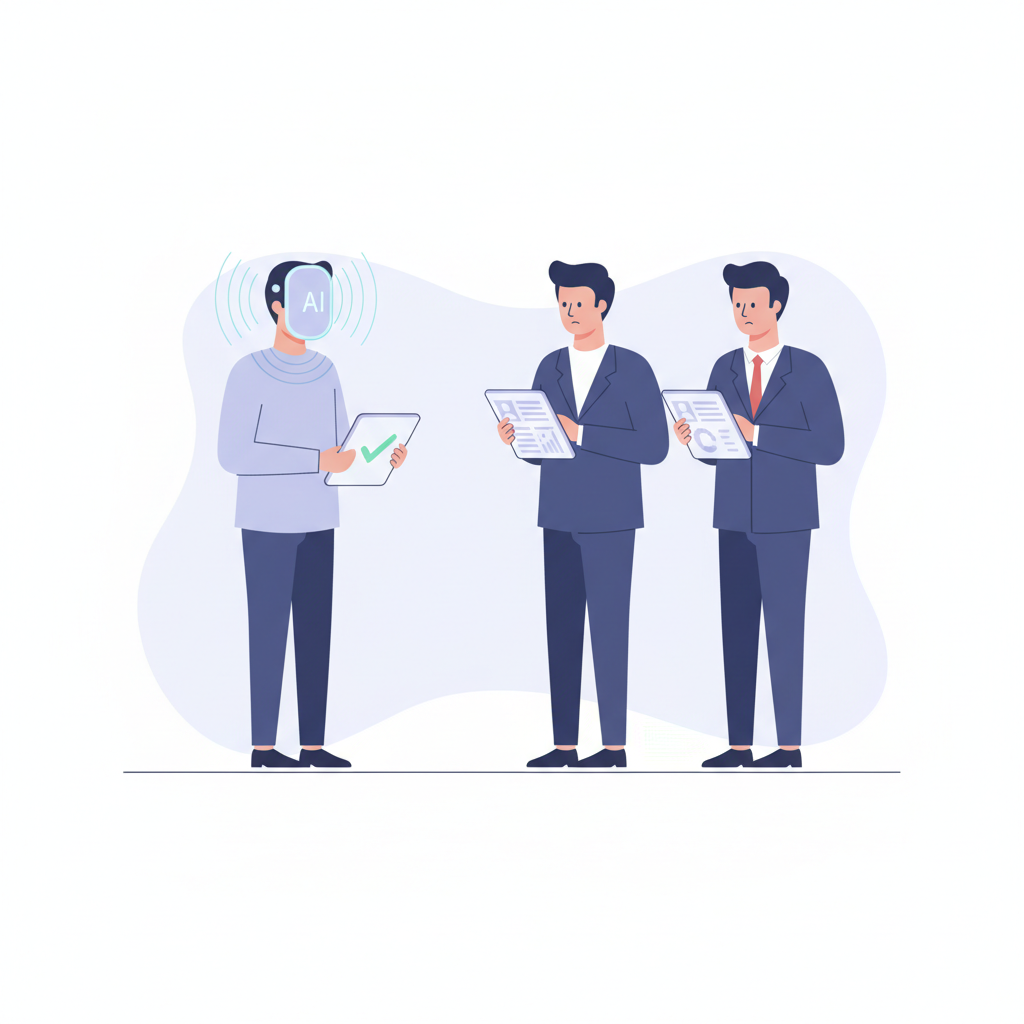
A quiet but significant shift is reshaping the hiring landscape, and it has little to do with tight labor markets or remote work preferences. A growing number of job candidates are turning to artificial intelligence tools to manipulate the application and assessment process, and new research suggests that the vast majority of these attempts slip past current safeguards undetected. For HR leaders and hiring managers, this development raises urgent questions about fairness, cost, and the very integrity of talent acquisition.
The scale of the problem is larger than many realize. According to recent analysis, there has been a spike in AI-assisted cheating across everything from automated resume screening to skills-based tests and recorded video interviews. Candidates are using generative AI to craft tailored responses, solve coding challenges, impersonate natural conversation, and even generate realistic video feeds that bypass traditional proctoring. The striking part? Most organizations lack the tools or processes to reliably spot these behaviors, meaning cheaters are advancing through hiring funnels while honest applicants are edged out.
The New Face of Hiring Fraud
Cheating in hiring is not new, but the introduction of accessible, powerful AI has transformed it from a crude act of embellishment into a technologically sophisticated game of cat and mouse. Today, free and subscription-based AI platforms can generate compelling cover letters, answer situational judgment tests with apparent emotional intelligence, and solve technical problems in seconds. In asynchronous video interviews, deepfake-like avatars and script-fed responses are becoming harder to distinguish from genuine human interaction. Even live video calls can be augmented by hidden screen feeds or earpiece prompts that feed candidates answers in real time.
The temptation for candidates is understandable. In a hyper-competitive job market where an application can be rejected in seconds based on a keyword mismatch, the pressure to stand out is immense. Yet the erosion of trust that follows undetected cheating is corrosive for everyone. Companies risk hiring people who are not qualified for the role, leading to expensive onboarding failures, performance gaps, and potential safety or compliance risks. Honest candidates, meanwhile, lose faith in processes that seem rigged in favor of the technologically brazen.
Why Detection Is Falling Behind
The core challenge is that conventional integrity measures were not designed for an era of generative AI. Plagiarism checkers look for copied text, not original AI-produced content. Proctoring software scans for eye movements or background noise, not for second screens or invisible earphones. Psychometric tests assume a consistent human behavioral pattern, not one that can be simulated by a language model trained on millions of personality profiles. Even when anomalies are flagged, the volume of applications makes exhaustive human follow-up impractical.
Many companies are also reluctant to invest in detection technologies out of fear of creating a hostile candidate experience or introducing biases. Overly aggressive monitoring can alienate genuine applicants, especially in a climate where privacy concerns are heightened. HR teams are thus caught in a bind: they need to verify authenticity without turning the hiring process into a surveillance exercise. This tension is compounded by the fact that AI cheating is often indistinguishable from a candidate who simply used AI as a legitimate preparation tool—like practicing with a chatbot—making the line between acceptable augmentation and outright deception dangerously thin.
Rethinking Assessment, Not Just Detection
A purely defensive approach—trying to outsmart cheaters with better detection software—may be a losing battle. As AI models improve, the gap between genuine and synthetic output will narrow further. Forward-thinking HR leaders are beginning to question whether the real problem lies in assessment designs that are too easy to game in the first place. If a test can be solved by pasting a prompt into a chatbot, perhaps the test itself is not measuring the right things.
There is a growing push for more dynamic, context-rich evaluation methods that require real-time problem-solving, interpersonal interaction, and domain-specific creativity that AI cannot yet replicate convincingly. Live simulations, collaborative tasks, and structured conversations that probe a candidate's reasoning process are gaining traction. These methods are not immune to manipulation, but they raise the bar significantly and make the cost of cheating much higher. Some organizations are also experimenting with transparent policies that explicitly allow certain AI tools while asking candidates to show their work—turning the spotlight onto how a person thinks rather than just the final answer.
Despite the alarm, it would be a mistake to frame this moment only as a crisis. The rise of AI cheating is forcing a long-overdue conversation about what hiring truly needs to measure and how to do it fairly. As the industry adapts, platforms that already embed flexible, authentic assessment into their models—such as those used by remote-work focused companies—will have a natural advantage. For HR teams navigating this messy, expensive terrain, the path forward lies less in chasing the perfect cheat-detection tool and more in redesigning systems so that transparency and genuine skill become the path of least resistance.
Originally published by XMF, inspired by publicly reported industry news.
 Likes 0
 Save
Save
 Copy Link

 沪公网安备 31011702008840号
 Electronic Business License