

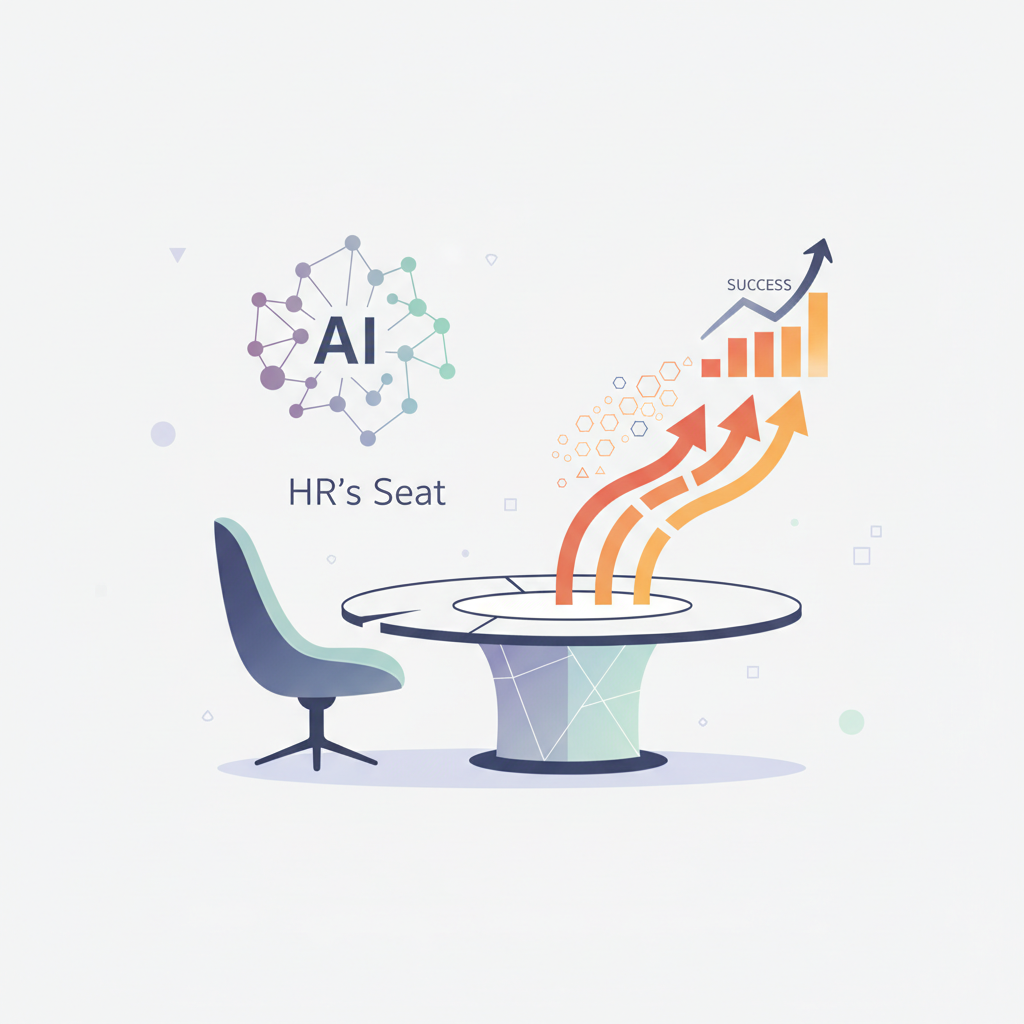
For all the talk of algorithms and data lakes, the real dividing line in artificial intelligence adoption may have less to do with technology and more to do with people – specifically, the people in human resources. A new study reveals that organizations where HR has a formal leadership role in AI implementation consistently outperform those where the function is sidelined. The finding challenges the conventional wisdom that AI is a domain reserved for IT and data science, suggesting instead that the organizations best positioned to benefit treat HR as a strategic architect of the AI journey.
The research surfaces at a critical moment. Companies are pouring billions into generative AI, predictive analytics, and intelligent automation, yet many struggle to turn these tools into sustained value. According to the survey, the fault line isn’t just about technical readiness, but about organizational ownership. When HR participates early and visibly in AI strategy, planning, and deployment, employees are more likely to trust the technology, use it effectively, and see it as a net positive for their work.
The New AI Divide: Ownership, Not Just Infrastructure
The study’s core insight is that AI’s success hinges on enterprise-wide alignment, and HR is uniquely positioned to foster it. In environments where AI projects are driven solely by engineering teams, the human dimensions of adoption – job design, upskilling, communication, and cultural readiness – often fall through the cracks. Conversely, when HR has a formal seat at the table, those dimensions become part of the implementation blueprint from day one. The research measured outcomes such as employee productivity gains, higher adoption rates, and lower turnover linked to AI-related anxiety, all of which were significantly better in HR-led AI initiatives.
This “AI divide” isn’t about which department buys the licenses or builds the models. It’s about who frames the questions. Does the organization ask only “Can we build this?” or also “How will this reshape roles, create learning curves, and affect our people’s sense of purpose?” HR leaders bring the latter lens, ensuring that AI serves the workforce rather than simply being imposed on it.
Why HR’s Involvement Changes the Game
The study highlights three concrete ways HR leadership elevates AI outcomes. First, HR acts as a translator between technical teams and the broader employee base, demystifying AI and aligning its capabilities with actual business needs. Second, HR embeds fairness and ethical considerations into the AI lifecycle, from bias audits in hiring algorithms to transparent performance monitoring systems. Third, HR architects the learning ecosystems – reskilling programs, internal mobility pathways, and knowledge-sharing platforms – that allow people to grow alongside technology rather than be displaced by it.
Importantly, the research found that early-stage involvement matters most. When HR is brought in only after a tool is built or a decision is made, its influence is limited to damage control or reactive communications. But when HR helps shape the problem statement and selection criteria, the outcomes are structurally different. One striking data point: companies with HR co-leading AI efforts reported a 28% higher likelihood of meeting or exceeding their intended return on investment compared to those where HR’s role was advisory or nonexistent.
Managing the Human Side at Scale
The human side of AI scale is often underestimated. Even the most accurate model will fail if managers don’t know how to interpret its outputs or if employees distrust the data it uses to make decisions about their careers. HR’s expertise in change management – a muscle built through years of digital transformation projects, mergers, and cultural shifts – becomes the engine that turns AI from a top-down directive into a bottom-up reality. Training programs, feedback loops, and empathetic leadership communications are not “soft” add-ons; they’re the hard infrastructure of AI adoption.
The research also touches on a growing body of evidence that transparent HR-led AI governance boosts psychological safety. When employees understand that algorithms for scheduling, performance feedback, or promotion are audited for bias and explained in plain language, their trust in the organization rises. That trust, in turn, fuels the kind of experimentation and candid feedback that algorithms need to improve over time.
A Strategic Seat, Not a Support Function
The conclusion is unambiguous: AI works better when HR helps lead it. For business leaders and boards, this means moving beyond viewing HR as a compliance-focused entity and instead seeing it as a strategic partner in the AI era. Practically, that involves including CHROs in early-stage AI steering committees, allocating budget for people-side AI activities, and measuring success not just by model accuracy but by employee experience metrics.
For HR professionals themselves, the findings are both an invitation and a mandate. To earn that seat, HR teams need to build digital literacy, understand the basics of machine learning, and become comfortable co-designing with data scientists. But the core value they bring isn’t technical prowess; it’s the deep understanding of organizational systems, motivation, and talent dynamics that no algorithm can replicate. As hybrid and remote work further blur the lines between technology and employee experience, platforms that support flexible staffing and global talent management can provide HR with the operational bandwidth to focus on strategic AI leadership.
Originally published by XMF, inspired by publicly reported industry news.
 Likes 0
 Save
Save
 Copy Link


 沪公网安备 31011702008840号
 Electronic Business License