

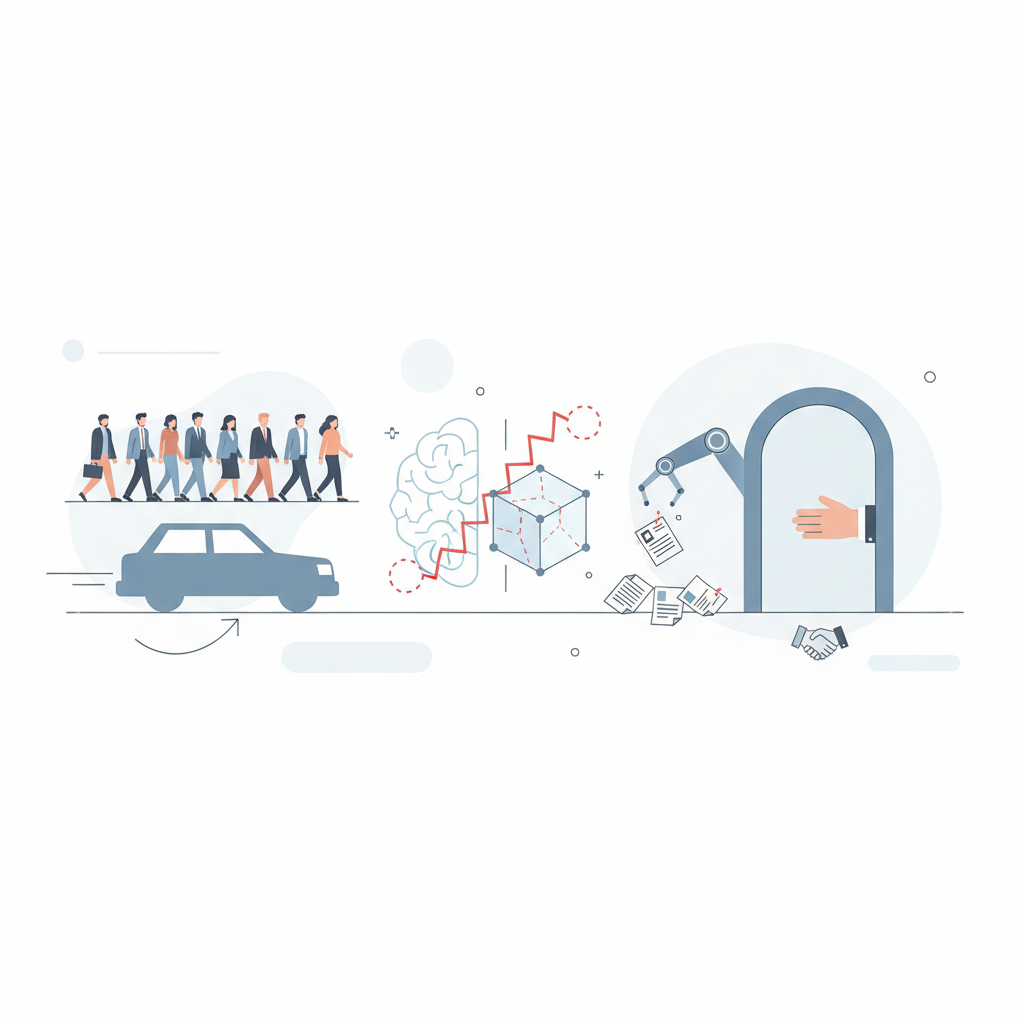
When Ford Motor Company recently rehired 350 engineers it had let go just months prior, the move sent ripples through the human resources world. The layoffs, driven in part by an AI system that evaluated talent and cost structures, had been intended to streamline operations. Instead, they created a costly and embarrassing reversal that has HR leaders everywhere reconsidering how artificial intelligence is used in workforce decisions.
The story is not unique to Ford. As more organizations adopt AI-powered tools for hiring, performance management, and restructuring, the line between data-driven efficiency and human oversight is growing dangerously thin. The so-called "AI boomerang"—where technology-led terminations prove shortsighted—is becoming a wake-up call for the entire profession.
The Ford Reversal: What Went Wrong
In the fall of 2023, Ford initiated a round of layoffs targeting engineering roles as it shifted focus toward electric vehicles and software-defined platforms. The company reportedly used an AI-driven model to identify which roles were redundant, factoring in project priorities, skill sets, and salary data. On paper, the algorithm promised a dispassionate, numbers-based approach to cost cutting. Yet within months, the consequences became clear: critical knowledge and specialized expertise had walked out the door, and programs stalled. Desperate to recover momentum, Ford brought back 350 of those same engineers—sometimes at higher compensation to entice them back.
This reversal exposed a fundamental flaw: AI tools, for all their analytic power, often misunderstand the nuance of human capital. An algorithm may flag a senior engineer as expensive relative to a junior peer, but it cannot weigh the institutional memory, mentorship, and problem-solving instinct that the veteran brings to a team. The Ford case shows that when layoffs rely too heavily on artificial intelligence without adequate human judgment, the outcome can be both financially damaging and operationally disruptive.
Why AI Layoff Tools Fall Short
AI systems used in workforce decisions typically prioritize quantifiable data—cost centers, tenure, recent performance scores, even proxy metrics like email volume or collaboration patterns. While these data points can offer valuable insights, they rarely paint a complete picture. An employee's expertise might be critical to a product launch six months away, even if their current project bucket appears light. The AI, trained on historical patterns, may not foresee that strategic need.
Moreover, layoff algorithms often lack context. They can inadvertently amplify biases baked into the data, disproportionately affecting workers from certain groups or dismissing those who work on less measurable but essential tasks. In the Mobley v. Workday case, for instance, an applicant alleged that AI screening tools discriminated against him based on race and disability—a legal challenge that underscores how automated decisions can create liability. While that case centers on hiring, the same principles apply to reductions in force: without careful oversight, AI can make decisions that are legally perilous and ethically questionable.
There is also the human factor of trust and morale. Employees who survive an AI-led layoff wave may become disengaged, wondering if they are just another data point awaiting the next algorithmic cut. When a company then scrambles to rehire those it terminated, trust erodes further. The Ford boomerang illustrates that workforce planning cannot be reduced to a machine-learning exercise; it requires the intuition and empathy only human leaders can provide.
How HR Leaders Can Avoid the Boomerang
So what should HR and business leaders do differently? The Ford story does not suggest abandoning AI—far from it. Instead, it calls for a more thoughtful integration of technology and human judgment. First, AI should serve as an advisor, not a decision-maker. Layoff lists generated by algorithms must be reviewed by managers who understand team dynamics, hidden skills, and future project pipelines. AI can highlight potential redundancies, but the final call should always rest with leaders who can apply a broader lens.
Second, organizations need to align their talent models with long-term strategy. Too often, layoffs are reactive exercises driven by short-term cost targets. HR leaders should use AI to simulate different scenarios and model the downstream impact of losing key profiles, not just the immediate savings. When Ford discharged engineers central to its EV transition, the absence of those skills quickly became a strategic bottleneck. A better modeling approach might have flagged the risk sooner.
Third, transparency and communication are essential. If AI plays a role in workforce decisions, employees deserve to know the criteria and have avenues to appeal. Clear processes not only mitigate legal exposure but also preserve engagement among remaining staff. Tools that aggregate skills data and internal mobility opportunities can help companies reassign talent rather than expel it—an approach that reduces the likelihood of a costly rehire cycle.
Finally, invest in continuous skills tracking and flexible workforce structures. The modern labor market requires agility. Instead of permanent layoffs, companies might consider internal gig marketplaces or contract-based arrangements that allow them to scale up and down without severing valuable relationships. This is where flexible staffing platforms, such as XMF, can provide a buffer—enabling organizations to retain access to critical expertise even during restructuring periods.
The Ford episode is more than a corporate anecdote; it is a milestone in the evolving relationship between AI and HR. The technology holds immense promise, but as this case makes plain, it is not yet wise enough to handle the complexities of human talent on its own. HR leaders must blend data with discernment, ensuring that the AI tools they deploy serve their people—not just the bottom line.
Originally published by XMF, inspired by publicly reported industry news.
 Likes 0
 Save
Save
 Copy Link



 沪公网安备 31011702008840号
 Electronic Business License