

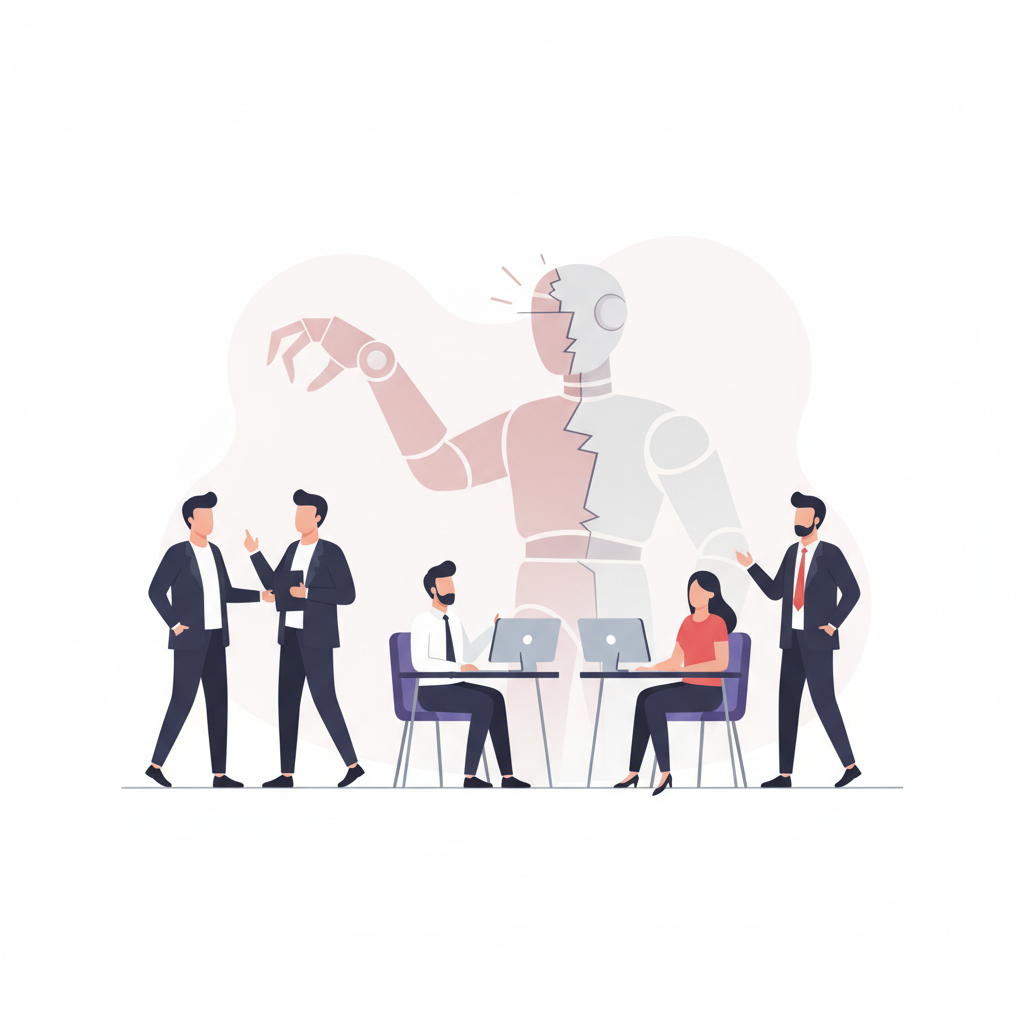
When Ford Motor Company laid off hundreds of engineers earlier this year, the decision was guided by data-driven algorithms designed to streamline costs and optimize talent allocation. The move, initially praised internally as a tough but necessary efficiency measure, soon unraveled. Within months, the automaker found itself scrambling to rehire roughly 350 of those same engineers — a costly reversal that has sent shockwaves through HR circles and ignited a debate about the role of artificial intelligence in workforce decisions.
The Boomerang Effect of Algorithmic Cuts
Ford’s experience is not an isolated case, but its scale and visibility have made it a cautionary tale. The company had relied on AI-driven analytics to identify roles deemed redundant or low-value, part of a broader push to reshape the engineering workforce for an electric and software-defined future. Yet shortly after the layoffs, critical projects stalled. The institutional knowledge that departed with the engineers left gaps that could not be quickly filled by remaining staff or new hires. Production timelines slipped, and innovation bottlenecks appeared in vehicle programs that were central to Ford’s strategy.
The rehire wave exposed a fundamental weakness in many AI layoff models: they often prioritize cost metrics and role taxonomies while undervaluing tacit knowledge, cross-functional relationships, and the nuanced, often unquantifiable, contributions of individuals. An algorithm can easily flag a role that appears underutilized based on project completion rates or time-allocation data, but it may miss the mentor who quietly keeps a junior team productive or the engineer whose deep expertise in legacy systems is indispensable during a platform transition.
Where the Data Falls Short
HR leaders analyzing Ford’s misstep point to a persistent blind spot: the data that feeds layoff algorithms is invariably backward-looking and incomplete. Performance scores, project hours logged, and organizational charts provide a snapshot, but they fail to capture the human elements of collaboration, problem-solving, and culture. One senior HR executive interviewed in the wake of the Ford news noted, “We are very good at measuring what’s easy to count, but the value of a great employee often lies in what’s hard to count.”
Moreover, algorithmic layoffs often ignore workforce planning for the near future. A skillset that appears redundant today might become critical tomorrow due to a shift in product strategy or market demand. Ford’s engineers had deep understanding of vehicle platforms that, while not central to the immediate roadmap, were essential for maintaining existing product lines and supporting new development. Rehiring them meant offering competitive compensation packages, covering relocation, and enduring lengthy onboarding — expenses that dwarf the initial savings from the layoffs.
This data deficit is compounded when AI systems are deployed without sufficient human oversight. In many organizations, HR and finance teams adopt workforce analytics tools with the promise of objective, bias-free decisions. Yet these tools are only as unbiased as the data and assumptions built into them. When cost-saving targets are the primary input, the output will naturally favor short-term trimming over long-term resilience.
Rethinking AI’s Role in HR Strategy
The Ford case is prompting HR leaders to reconsider not whether to use AI in workforce decisions, but how. There is growing consensus that AI should be a decision-support tool, not a decision-maker. For instance, algorithms can flag patterns or potential surplus areas, but final people decisions should involve managers who understand the day-to-day realities of their teams. A combination of quantitative analysis and qualitative human judgment yields better outcomes, especially when the stakes involve hundreds of careers and organizational capability.
Some companies are experimenting with “boomerang risk indices” that weigh the cost of rehiring against the probability that a role will be needed again within 12 to 18 months. Others are shifting from permanent layoffs to flexible staffing models that allow them to scale up or down without the permanent loss of talent. This is where remote and hybrid work arrangements gain new relevance: organizations can tap into a global talent pool on demand, converting fixed labor costs into variable ones without the trauma of mass layoffs.
Additionally, transparency around how AI tools are used in workforce planning is becoming a point of employer branding. Employees are more likely to trust an organization that openly communicates the role of analytics in its decisions and provides avenues for appeal or human review. The backlash from algorithmic layoffs — both internal and reputational — can be more damaging than the layoffs themselves.
A Better Path Forward
The lesson from Ford is not that AI is unsuited for HR, but that it must be deployed with humility and context. Workforce planning tools can excel at scenario modeling, skill-gap analysis, and predictive attrition risk. What they cannot do is replicate the intuition of a team leader who knows that a particular engineer’s obscure coding skill will be vital for a future product launch. The smartest organizations are now treating AI as a collaborator that surfaces insights, while reserving final authority for humans who can weigh the intangible factors.
As businesses navigate market volatility, the ability to adapt talent strategies without destructive layoffs becomes a competitive advantage. Flexible staffing models, internal mobility programs, and even temporary redeployment can prevent the costly boomerang Ford experienced. For those exploring more agile workforce models, platforms like XMF that facilitate flexible staffing and remote engagements can provide a buffer against the boom-and-bust hiring cycles that lead to such missteps. For HR leaders, the rehire wave is a vivid reminder that while algorithms can count heads, they cannot count value. In a landscape where talent remains the most critical asset, that distinction matters more than ever.
Originally published by XMF, inspired by publicly reported industry news.
 Likes 0
 Save
Save
 Copy Link



 沪公网安备 31011702008840号
 Electronic Business License