

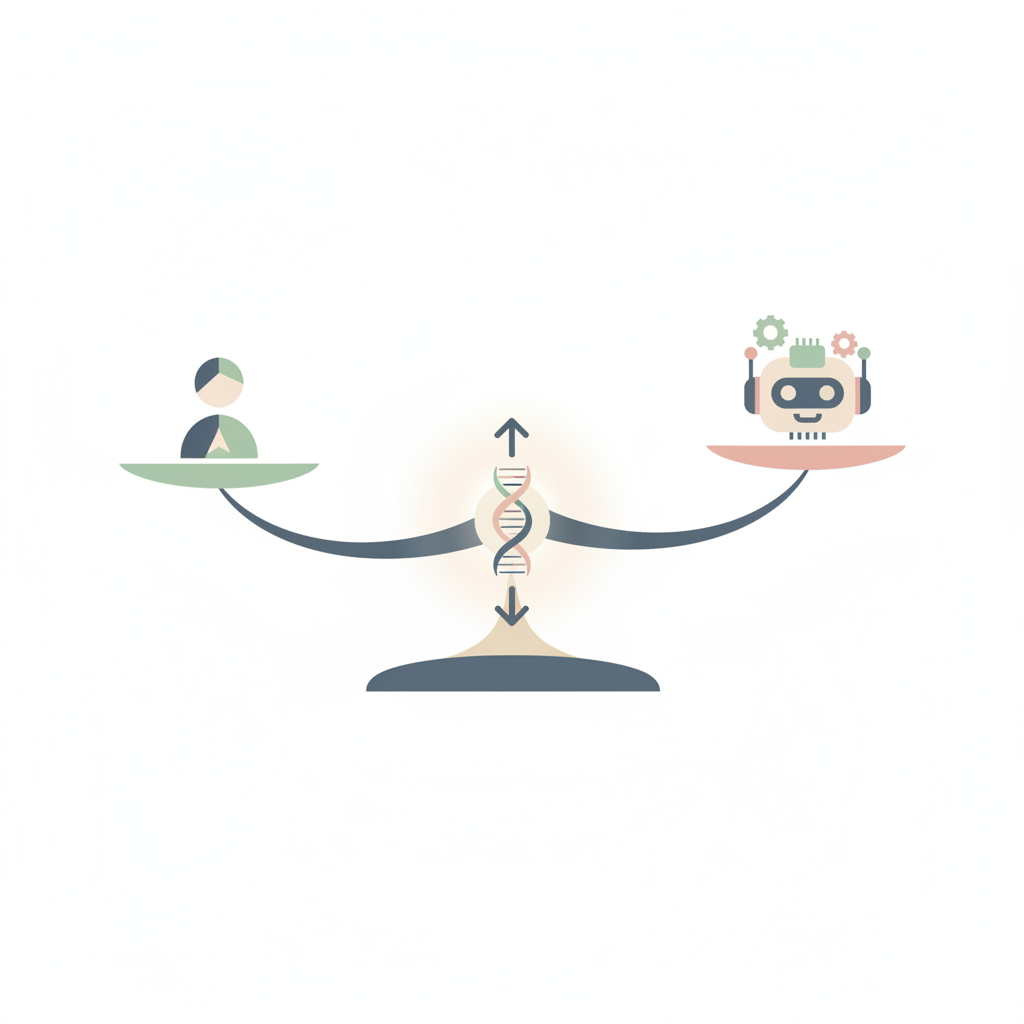
Atlassian, the enterprise software company behind tools like Jira and Confluence, is rethinking what human resources means in an era where AI agents are becoming coworkers. The company has created a new leadership position tasked with planning capacity not just for people, but for AI agents as well. The move signals a profound shift in how forward-looking organizations are structuring their workforce, with HR at the center of the conversation about where human judgment ends and automated action begins.
The Emergence of a Hybrid Workforce Planner
The newly defined role, explained by Atlassian VP Alicia Lenart, is designed to answer a question most businesses are only starting to ask: How do you allocate work when both humans and AI agents can perform it? It’s not simply about laying off workers and replacing them with bots. Instead, it’s a careful calibration of capacity, quality, and the strengths each type of contributor brings.
Lenart frames the position as a natural evolution in workforce planning. Just as companies once dedicated resources to balancing full-time employees with contractors or offshore teams, they now need someone to oversee the fluid mix of human talent and AI support. This planner will analyze which tasks require emotional intelligence, creative problem-solving, or ethical nuance, and which can be offloaded to AI agents that operate tirelessly and at scale. The goal isn't just efficiency; it's a strategic rethinking of how work gets done.
For HR professionals, the implication is clear. Static job descriptions and annual headcount plans are giving way to dynamic models where an “employee” might be a person one day and an AI module the next, depending on the project. The hybrid workforce planner will need to collaborate closely with IT, operations, and team leads, yet remain rooted in HR because the role ultimately shapes culture, inclusion, and the employee experience.
Why Mandates Fail and Autonomy Wins
Atlassian is also taking an unconventional stand on AI adoption: it rejects top-down mandates. While many organizations are imposing company-wide requirements to use certain AI tools or hit usage targets, Lenart argues that such edicts backfire. Forced adoption creates resistance, shallow engagement, and a checkbox mentality. Instead, Atlassian encourages teams to experiment with AI in ways that make sense for their own workflows, then share successes.
This approach relies on trust and education rather than compliance. HR plays a key role in building that environment—offering learning paths, showcasing peer examples, and making it safe for employees to admit when an AI tool didn’t deliver. The hybrid workforce planner, then, isn’t a central command-and-control figure but a facilitator who helps teams discover when to bring in an AI agent and when to lean on human expertise.
The lesson for other organizations is stark: as AI capabilities accelerate, the human factor in program management becomes more critical, not less. Employees who feel empowered to use AI as a partner, rather than forced to use it as a replacement, are more likely to find innovative applications that truly drive productivity and job satisfaction.
From HR to Human-AI Systems Architect
The Atlassian move echoes a broader concept gaining traction in the industry: the Human Systems Architect. This role envisions HR not as a caretaker of policies and benefits, but as a designer of the entire work system—blending human talent, AI agents, and digital tools into a cohesive, adaptive organization. In such a model, culture, performance management, and learning are all reexamined through the lens of a mixed workforce.
For remote and hybrid teams, this perspective is especially potent. With people spread across time zones and communicating asynchronously, AI agents can serve as the glue that keeps projects moving—scheduling, summarizing decisions, even generating first drafts. Yet without thoughtful human oversight, reliance on AI can erode the casual connection and spontaneous creativity that drive innovation. The hybrid workforce planner must ensure that the technology serves the fundamental human need for collaboration and meaning.
As organizations navigate this new landscape, the need for flexible workforce management tools becomes apparent. Platforms like XMF, which help companies blend full-time, contract, and remote talent, are well-positioned to extend their models to include AI service providers, making this hybrid planning practical at scale. The key takeaway from Atlassian’s experiment is that HR’s future isn’t about defending human jobs against AI—it’s about orchestrating a symphony where both play their best parts.
Originally published by XMF, inspired by publicly reported industry news.
 Likes 0
 Save
Save
 Copy Link

 沪公网安备 31011702008840号
 Electronic Business License