

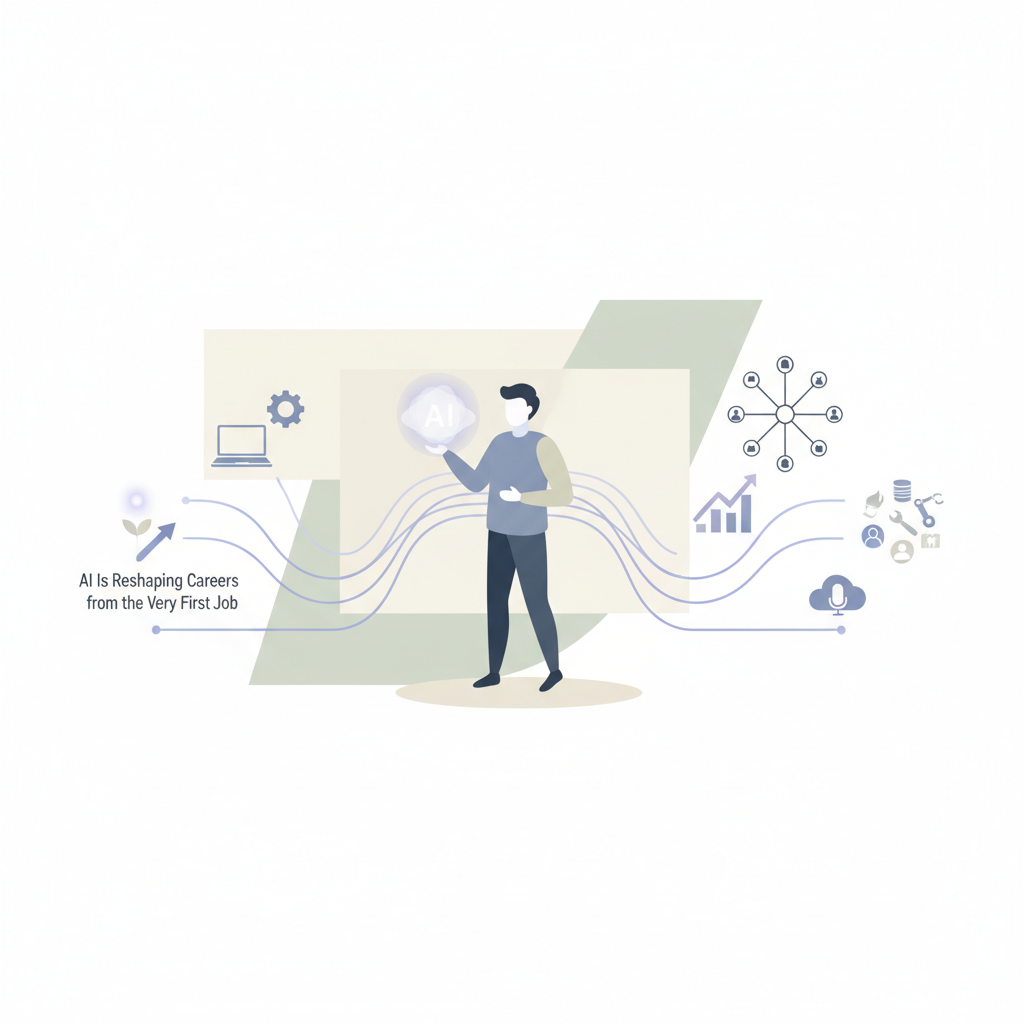
The entry-level job, long the rite of passage for new graduates, is undergoing a transformation that few could have predicted a decade ago. Artificial intelligence is not just automating routine tasks; it is fundamentally redefining what it means to start a career. For HR professionals, business leaders, and the millions of remote workers navigating this shift, the implications are profound: the skills that once guaranteed a foot in the door are being replaced, and the entire talent lifecycle—from hiring to development—must be reimagined.
The Disappearing Training Ground
Traditionally, first jobs were built on a scaffolding of repetitive, rule-based tasks. Junior analysts crunched numbers, assistants managed calendars, and customer support reps followed scripts. These roles gave newcomers the opportunity to learn an organization’s culture, build professional networks, and develop situational knowledge—all while making only low-risk mistakes. AI now handles many of these tasks with speed and precision, from generating reports to scheduling meetings and even resolving customer queries. The consequence is that the classic entry-level position is shrinking—or in some cases, vanishing entirely. Companies can no longer expect to hire for rote work and then gradually upskill employees over years. Instead, the very first job is becoming a role that demands immediate judgment, creativity, and the ability to work alongside intelligent machines. For remote teams, this challenge is amplified because new hires often lack the informal, in-person cues that once helped them parse ambiguity.
Skills Over Credentials: A New Hiring Playbook
This shift is forcing HR teams to rethink their hiring criteria. A degree from a prestigious university says little about a candidate’s ability to collaborate with an AI agent or to interpret data that a model has already synthesized. Forward-thinking organizations are moving toward skills-based hiring, where assessments and practical problem-solving carry more weight than resumes. Analysis from platforms like LinkedIn shows that the half-life of technical skills is shrinking rapidly—what is cutting-edge today can become outdated in months—while human-centric abilities like communication, adaptability, and emotional intelligence are holding their value. For remote and hybrid roles, these soft skills become even more critical, as employees must navigate digital collaboration tools and maintain cohesion without face-to-face interaction. The interview process itself is evolving: instead of asking about past experience, recruiters are presenting scenarios that require candidates to demonstrate how they would use AI to solve a problem or make a decision. This democratizes opportunity by focusing on potential rather than pedigree, but it also demands that companies invest in robust, unbiased assessment methods.
Rethinking Onboarding and Development in a Remote-First World
With many first jobs now fully remote, the loss of organic, in-office mentorship is another acute issue. New hires used to absorb norms and tacit knowledge by sitting next to seasoned colleagues. In a distributed environment, that informal learning evaporates, and AI tools can become both a problem and a solution. Companies are experimenting with AI-powered onboarding assistants that guide new employees through paperwork, training modules, and internal knowledge bases, providing instant answers to common questions and reducing the anxiety of the unknown. Yet there is no substitute for human connection, so successful remote onboarding programs are pairing these digital tools with structured mentorship, virtual shadowing, and regular one-on-one check-ins. The goal is to create a learning ecosystem where the first job is a launchpad for continuous growth, not a dead-end role that AI will eventually make obsolete. When done right, this model can actually accelerate professional development by exposing new hires to a wider variety of tasks and decision-making scenarios much earlier than traditional paths would allow.
Strategies for Business Leaders
What does this mean for CEOs and heads of people operations? First, job descriptions must be audited and redesigned to emphasize the human-machine partnership. Instead of listing static duties, they should articulate outcomes and the AI competencies required to achieve them—such as “able to review and refine AI-generated analysis for accuracy and bias.” Second, investment in ongoing employee development can no longer be a perk; it must be a core operational strategy. This includes not only reskilling programs but also giving employees access to the latest AI tools and the autonomy to experiment with them. Finally, organizations need to build a culture of psychological safety where admitting what you don’t know is rewarded, because the pace of change means everyone—from the newest hire to the C-suite—is constantly learning. As companies embrace skills-based, flexible hiring to meet this new reality, platforms like XMF are helping them connect with remote-ready talent that can adapt to AI-augmented workflows quickly. The organizations that thrive will be those that see the first job not as a static entry point but as a dynamic, evolving relationship between people and technology.
Originally published by XMF, inspired by publicly reported industry news.
 Likes 0
 Save
Save
 Copy Link


 沪公网安备 31011702008840号
 Electronic Business License