


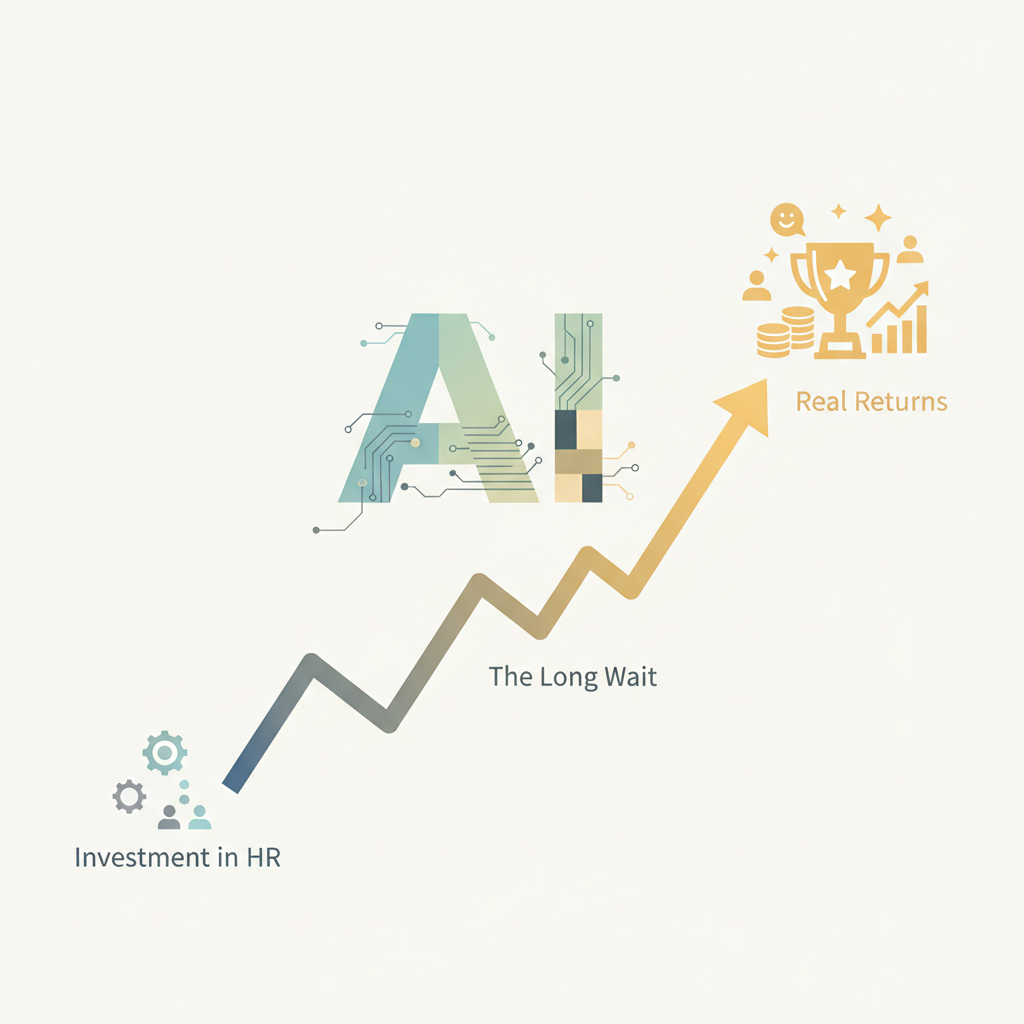
The corporate world has been flooded with promises that AI will revolutionize human resources overnight—slashing time-to-hire, eliminating bias, and predicting turnover before it happens. But according to a growing body of economic analysis, HR leaders may need to temper their expectations. A recent analysis by an economist featured in HR Executive suggests that the measurable return on investment for AI in HR could take years to materialize, even as upfront costs continue to climb. For chief people officers and business leaders weighing budget allocations, this raises a critical question: how do you justify the spend today when the payoff feels like a distant promise?
The Disconnect Between Hype and Hard Numbers
The allure of AI in HR is undeniable. Tools that draft job descriptions, screen resumes, answer employee queries via chatbots, and even analyze engagement surveys have moved from pilot programs to mainstream adoption. HR vendors tout dramatic efficiency gains—one platform might claim to reduce screening time by 80%, another to improve quality-of-hire through machine learning algorithms. Yet translating these operational improvements into hard financial returns is proving elusive. As the economist in the HR Executive piece explains, many organizations are discovering that time saved doesn’t automatically equate to dollars earned. A recruiter who can sift through 200 applications instead of 50 might simply fill the extra hours with other tasks, resulting in no immediate bottom-line impact. The latent productivity gains are real but diffuse, making them difficult to capture in a quarterly earnings report.
Moreover, much of HR’s value is qualitative—better culture, stronger leadership pipelines, higher employee morale. These are notoriously slow-moving metrics. For example, if an AI tool helps managers deliver more personalized feedback, the resulting boost in engagement might take 12 to 18 months to appear in turnover rates and even longer to affect customer satisfaction scores. This lag is a challenge for an HR function already under pressure to demonstrate strategic value. The economist’s view is not that AI is failing, but that the tools are often measured with the wrong yardstick, and the timeline for meaningful, quantifiable returns is naturally elongated.
Why the ROI Clock Runs Slow
Several structural factors contribute to the long wait for HR’s AI payoff. First, implementation is messy. Cleaning and integrating disparate HR data systems—from payroll to performance management to applicant tracking—can take months or even years. AI models trained on incomplete or biased data produce unreliable outputs, requiring extensive testing and recalibration. As the economist notes, the upfront investment in data infrastructure alone can dwarf the cost of the AI software itself.
Second, change management lags far behind technology deployment. Employees and managers must learn to trust and effectively use new tools. An AI-powered career-pathing tool is useless if workers ignore its recommendations or if HR business partners override its suggestions. Building that trust and reshaping workflows is a gradual, human-intensive process that isn’t captured in a standard ROI calculation.
Third, the benefits of AI in HR often compound in the background. Predictive attrition models, for instance, become more accurate as they ingest years of historical data. Algorithms that match internal talent to gig projects need time to observe enough project outcomes to fine-tune their recommendations. This means the productivity curve is back-loaded—modest improvements in year one, accelerating in years three and beyond. Many organizations, however, lose patience before the inflection point.
Strategic Patience and Practical Steps
So should HR leaders hit pause on AI initiatives? Hardly. The economist’s caution is a call for a more disciplined approach, not a retreat. The first step is to set realistic expectations with the C-suite. Frame AI adoption as a multi-year capability build rather than a cost-cutting quick fix. Define success metrics that bridge operational improvements and eventual financial outcomes—for example, tracking recruiters' time saved today while projecting how that time could be reinvested into strategic workforce planning that drives revenue growth tomorrow.
Second, prioritize use cases with the shortest feedback loops. Chatbots handling routine employee questions can deliver immediate volume reduction that is relatively easy to quantify. Automated scheduling for interviews or training sessions eliminates back-and-forth emails and shows visible productivity gains within months. These quick wins build credibility and buy the time needed for longer-horizon projects like skills-based talent marketplaces or AI-driven succession planning.
Finally, HR organizations should complement AI investments with flexible resource models that allow them to absorb both the slow pace of returns and the volatility of today’s talent market. Platforms that support remote and hybrid staffing can help teams manage fluctuating workloads without committing to permanent headcount, freeing up budget to fund iterative AI rollouts. By combining patient capital for AI with agile workforce solutions, HR leaders can navigate the multi-year journey toward genuine transformation.
Originally published by XMF, inspired by publicly reported industry news.
 Likes 0
 Save
Save
 Copy Link



 沪公网安备 31011702008840号
 Electronic Business License